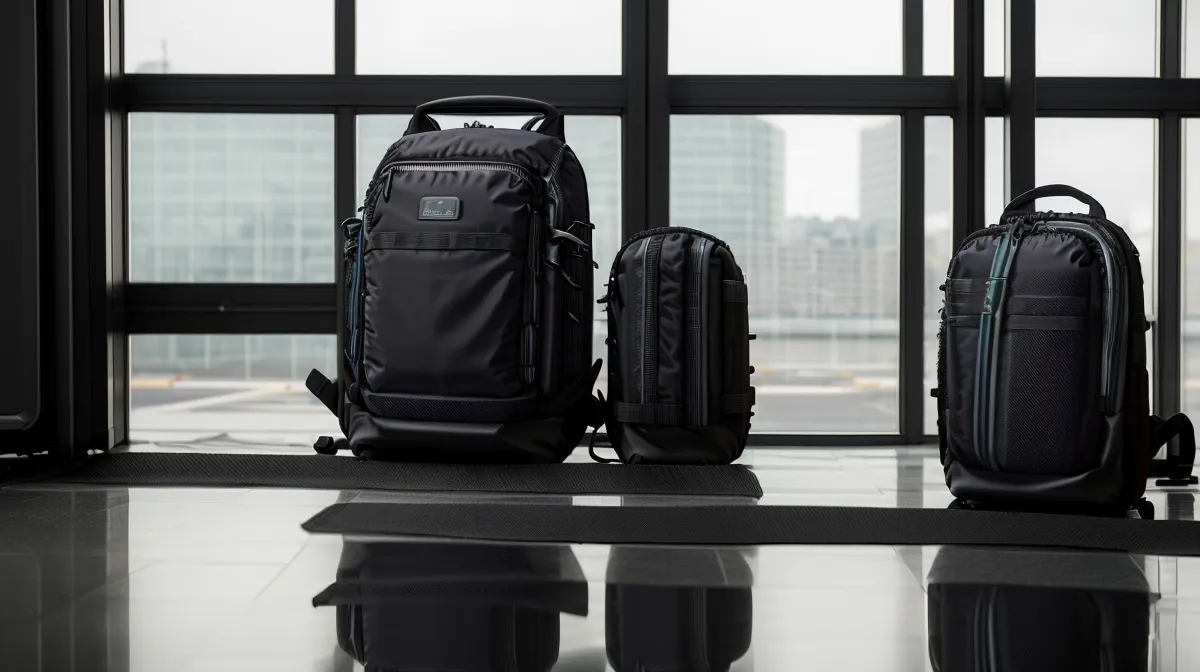
The zipper catches, then gives, and my blazer, a charger brick, and a fourteen-inch laptop slide out onto the hotel comforter before I've even set my keycard down — because the business travel backpack I bought on a whim has a laptop sleeve that turned out to be little more than a flap of nylon with ambitions. That's the moment you find out whether a bag was built by someone who flies for a living or by someone who designed it to look good in a product photo.
Quick disclosure before we go further: some of the links below are affiliate links, and if you buy through one I earn a small commission at no extra cost to you. None of these bags got a ten-minute unboxing and a verdict — everything mentioned here has spent real time on my shoulder between gates.
A business travel backpack isn't a fashion statement in my world — it's the one piece of gear standing between a laptop and the floor of a crowded terminal, and most of what gets marketed as a "laptop sleeve" is closer to a paper towel than a shock absorber. Readers ask me some version of the same four or five questions once they're shopping for one of these, so instead of dressing it up as a journey, here are the direct answers.
What Actually Makes a Business Travel Backpack Survive Regional-Jet Flying?
Regional jets are where backpack promises go to die. The Embraer and CRJ aircraft that make up a good chunk of a Midwest-heavy schedule have overhead bins that laugh at anything oversized, and the personal-item slot under the seat is stingier than most people expect — I've laid out the exact bin and personal-item numbers in a size chart elsewhere, so I won't repeat the full breakdown of a standard domestic carry-on here. What matters on this page is simpler: your backpack has to double as your entire mobile office once the overhead space runs out before boarding group four.
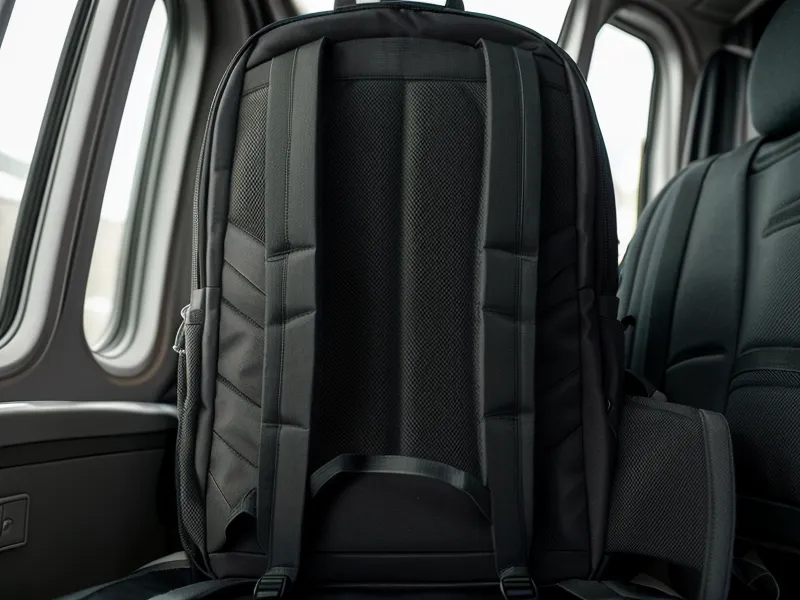
Material matters more than most shoppers realize. Ballistic nylon — the stuff Cordura and most serious backpack brands lean on, which you can read up on in more depth on ballistic nylon generally — is the baseline for anything I'll trust with a laptop, the same way a kitchen knife needs decent steel before it's worth sharpening. One Friday afternoon, wedged into 4A while the guy beside me had one of those ultra-slim "minimalist" tech bags, I watched everyone walking down the aisle kick it because it had no structural integrity to speak of. My Briggs & Riley backpack, meanwhile, just sat there like a piece of carry-on furniture nobody could budge.
Weighing Hardshell Protection Against a Lighter Shoulder
Some newer backpacks build in a dedicated hardshell compartment for the laptop, and there's a genuine hardshell-versus-soft-side debate underneath that choice — one I go into at length when I'm comparing full carry-ons rather than backpacks. For a backpack specifically, the calculus tilts differently: a hardshell panel adds peace of mind against a hard drop, but you feel every extra ounce on the walk from the parking garage to the gate, and that lighter-is-better math has its own limits once you start trading real capacity for grams saved.
Soft-sided models with high-density foam have won me over lately, mostly because they flex just enough to wedge into a crowded bin while still cushioning a standard drop. Sensitive equipment might justify the hardshell weight penalty. For an ordinary corporate laptop, though, I'd rather carry the lighter bag and trust the zipper quality to hold up than lug extra ounces of shell I don't need.
How Does the Pass-Through Sleeve Earn Its Keep?
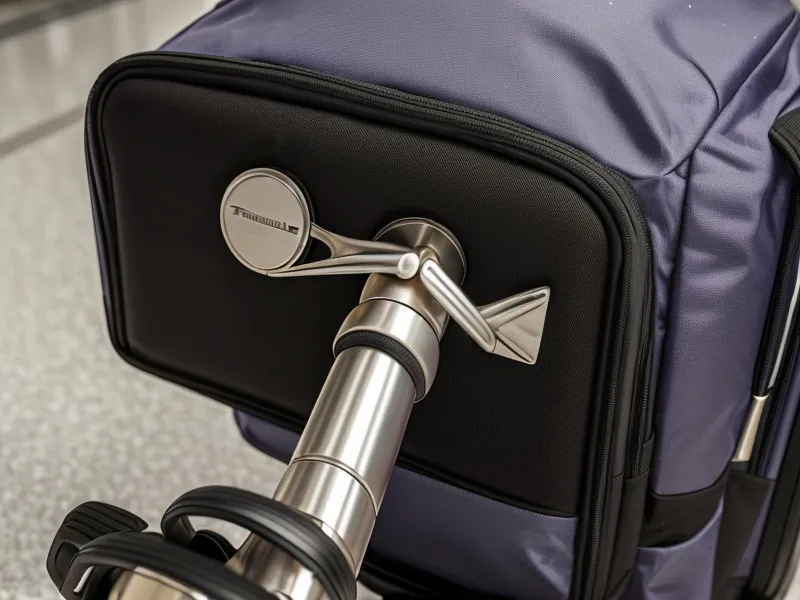
Earlier this year, threading a tight connection in Detroit, I was reminded why the pass-through sleeve — that band of fabric letting a backpack slide over a rolling suitcase handle — is basically the umbilical cord of business travel. Too loose and the backpack floops around like a wet noodle; too tight and you're wrestling it off while a boarding agent watches the clock. Travelpro models tend to nail this fit because the people designing them actually fly for a living, and it's a small detail that stops mattering only once you've done enough trips to know it never stops mattering. None of it counts for much if the roller underneath has cheap wheel hardware to begin with, though that's its own rabbit hole for another page.
My friend Geneva Thibodeau, who I mostly see now when our conference circuits happen to overlap, checks a bag every single time without a flicker of apology — she considers carry-on-only culture something closer to a collective delusion the industry talked us into. She's not entirely wrong that checking a bag sidesteps the whole pass-through-sleeve problem; she's just trading one set of risks for another.
Comparing the Top Contenders
The field narrows fast once you rule out anything that would embarrass you in a boardroom or fall apart in a jetway. Here's how the brands I keep coming back to stack up for someone doing this on a real schedule.
| Product | Best For | Key Feature | Durability Rating |
|---|---|---|---|
| Briggs & Riley | The Lifelong Traveler | Lifetime Warranty | 5/5 |
| Travelpro | The Value Seeker | Lightweight Design | 4/5 |
| LEVEL8 | The Modern Aesthetic | Aluminum Accents | 4/5 |
| Luggage Forward | The Heavy Packer | Shipping Convenience | N/A |
Briggs & Riley: The Buy-It-Once Choice
If my house caught fire and I had thirty seconds, I'm grabbing the Briggs & Riley off the rack by the door. Their lifetime warranty is the rare one that actually names airline-handler damage instead of hiding behind manufacturing defects only, which is the exact clause most competitors bury in fine print. There's also a compression system in their CX line that buys you an extra shirt or two in the same footprint without straining a zipper — I've done a full teardown of how that mechanism works elsewhere, so I'll just say it justifies part of the sticker price here. Built like furniture is the right comparison: heavier than the ultralight competition, but the shell will outlast whatever you paid for it. For anyone packing more than a laptop, there's a deeper look at the best Briggs and Riley options for business suits.
Does Travelpro Still Deserve the Flight-Crew Reputation?
There's a reason actual flight crews carry Travelpro instead of whatever's trending this month — pilots and flight attendants log more overhead-bin cycles in a month than most business travelers manage in a year, which makes them the closest thing this industry has to real torture testing. The zippers hold up and the pockets are the right pockets instead of twenty tiny ones nobody uses, and the whole thing weighs enough less than the Briggs that a pair of forty-one-year-old shoulders notice on the long walks through a big connecting hub. Hoisting one into an overhead bin the first time, I braced for the usual shoulder wince out of habit, and it just wasn't there — a strange thing to feel relieved about at six in the morning. Travelpro also sells a step-up Platinum Elite line with more structure and a higher price tier, which is a separate comparison for another day, and if a zipper ever jams mid-trip on any brand, that's a fixable problem rather than a reason to buy a replacement bag at an airport kiosk.
LEVEL8: The New School Style
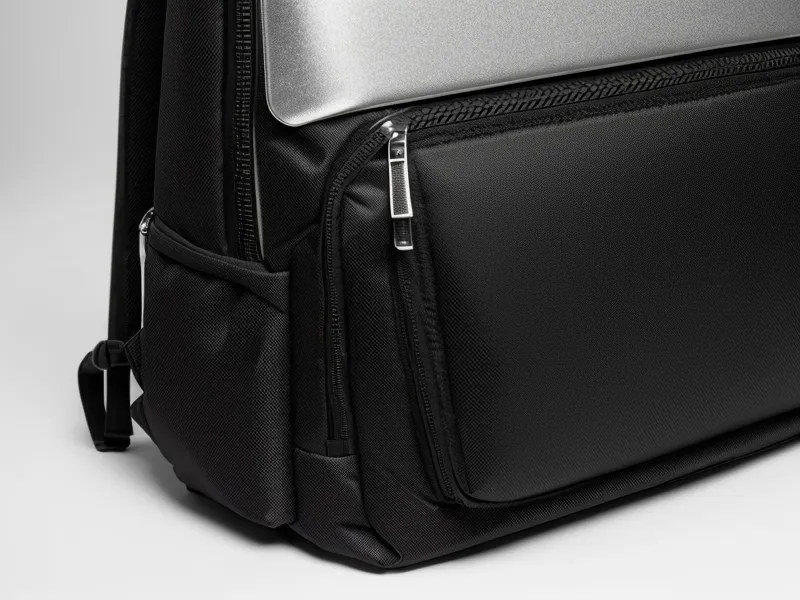
LEVEL8 is the pivot for anyone who wants a bag that doesn't look like it was designed by committee in the nineties — their aluminum-accented shells borrow the look of pricier European brands at a fraction of the cost, without pushing the backpack itself into full hardshell territory. Why aluminum dents instead of flexing back the way polycarbonate does is a longer conversation for when I'm reviewing their actual spinners, not their backpacks. What I'll say about the backpack line is that the strap hardware doesn't rattle or squeak through a quiet terminal, which matters more than people expect on an early walk past a gate full of sleeping passengers. The brand doesn't carry the decades of reputation that Briggs or Travelpro have banked, so if something fails a couple of years in, customer service is a newer operation rather than an institution — worth knowing before you buy.
When Shipping Beats Carrying a Backpack Yourself
On a three-city product tour, I got clever and shipped my sample cases and laptop bag ahead through a standard courier account instead of hauling everything through security three separate times. Calling ahead to confirm felt like enough due diligence at the time. It wasn't: three trips out of four, the front desk had no record of a package that turned out to be sitting in their back office the whole time, which is its own lesson in how a hotel's receiving process can quietly work against you. That's the specific gap Luggage Forward is built to close — door-to-door tracking that tells you exactly where the box is instead of a shrug at the front desk, backed by a guarantee that penalizes them, not you, if it shows up late. It only makes financial sense once you're moving real volume, sample cases or a second bag's worth of gear, since a single carry-on flyer should just eat the checked-bag fee instead, and shorter routes eat into the savings fast enough that it stops being worth the few days of buffer a ground shipment needs. There's more on why I use luggage shipping for the genuinely brutal multi-city weeks, including where the math actually breaks in your favor.
Quick Answers on Packing Cubes, Garment Bags, and Gate-Checking
Packing cubes and a structured backpack aren't competing systems — cubes solve the suitcase side of a trip, keeping shirts from migrating into the shoe compartment, while the backpack's whole job is protecting the laptop and whatever paperwork can't survive getting compressed. A backpack can't fully substitute for a garment bag if you're flying in a suit that needs to land unwrinkled, since a proper garment bag folds a jacket along its own seams in a way no backpack sleeve is built to replicate, so that stays a separate purchase for the three-piece-suit crowd. Gate-checking a backpack is the one move I try never to make, because it hands a bag full of electronics to the same jet-bridge treatment that ends careers for wheeled luggage, and a laptop doesn't forgive a drop the way a folded shirt does.
My neighbor Trent Hoback asked me at a block party a few summers back which bag to buy for a new job that had him flying occasionally, and he's turned into a useful control group ever since. He flies about once a month, which puts him in a completely different wear-rate bracket than someone doing this every other week, and he's happy carrying the same backpack to Saturday mornings at the Broad Ripple Farmers Market as he does to his one flight — because it never has to survive more than that. Figuring out which bracket you're actually in is the first question to answer, before you spend real money on features you may never stress-test.
The Backpack That Actually Survives Your Schedule
Match the bag to your real flight count, not the one you wish you had. Someone doing this every other week needs the internal structure, the warranty language naming airline damage specifically, and zipper quality that won't quit by the second year; someone flying a handful of times annually is better off saving money on a solid mid-tier bag from whichever brand fits their laptop. None of that shows up in a product photo, which is exactly why it gets skipped by people shopping off an ad instead of the gate-check horror stories that happen to someone else until, one day, they happen to you. If you only take one thing from this, let it be that: and if you're shipping heavy gear more than a couple of times a year, weigh Luggage Forward's tracking and guarantee against the cost of the next cracked zipper before you decide which one actually wins.