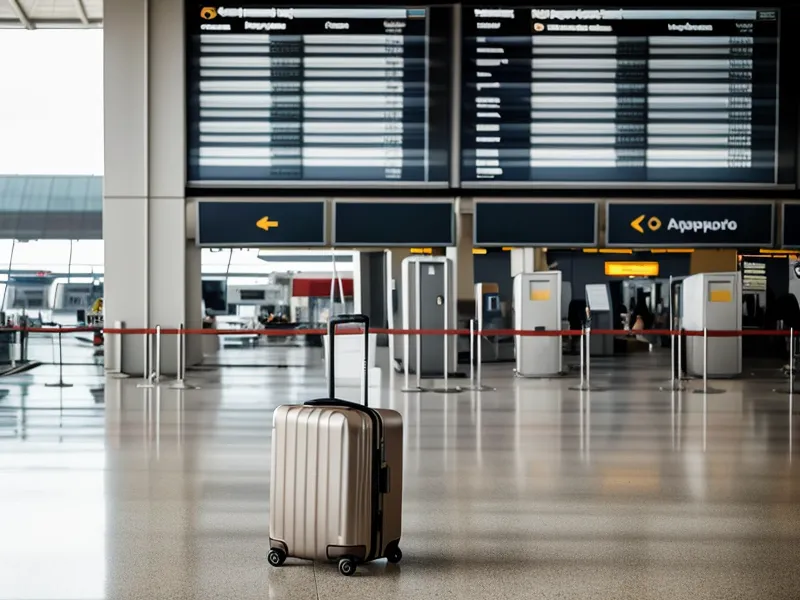
Most airlines will let you carry on a bag as large as 22 by 14 by 9 inches, wheels and handles included. Run that same bag through a regional jet working a CRJ-200 or an ERJ-145 route, though, and it can be too big for the bin. No argument, no exception, and no patience left in the gate agent who's heard every version of your argument already. That gap between carry-on legal and carry-on actually-fits is the whole reason this durability-focused rundown exists, and it's why I quit shopping by the size chart on the box and started shopping by the plane.
Quick disclosure before the gear talk starts: this site runs on affiliate links, and if you book a bag or a shipping service through one of mine, I earn a small commission at no extra cost to you. Every bag mentioned below went through actual regional routes — small Midwest airports, sloped jet bridges, the kind of connections where durability stops being a marketing word and starts being the difference between making your rental-car-counter time and standing in a jetway for twenty minutes. This corner of the site is about business travel hacks, not general gear reviews, and the picks below reflect that.
When "Carry-On Legal" Isn't Enough on a Regional Jet
Here's the trap. Bag manufacturers design toward the widest dimensions they can get away with, because a roomier interior sells better on a product page than a narrower one does. So most 22-inch spinners are built right up against that 22 by 14 by 9 ceiling, and that's fine on a mainline jet to Vegas or Orlando. On a fifty-seat Embraer ERJ or a Bombardier CRJ200, the overhead bins are noticeably shallower, and a bag sized to the mainline maximum simply won't clear them — not without a fight, and often not at all.
The smarter move isn't building a tougher bag that can survive a gate-check tag. It's sizing down far enough that the bag fits under the seat in front of you and never gets gate-checked on these planes in the first place. That's the real argument for underseat sizing over standard carry-on sizing on the regional circuit — you're not fighting the airline's baggage handlers, you're just staying out of their hands entirely. The space under an economy seat on a regional jet is barely wider than a laptop bag to begin with, and a chunk of what's left usually disappears to a life-vest pouch or a seat-support bracket, so there isn't much margin for a bag that runs big.
The Rotation That Actually Survived
Before any of this got systematic, my go-to bag was a soft duffel with a shoulder strap, and by the second terminal of any given day my shoulder had a dull ache that lasted through boarding. That's what sent me looking for something better in the first place. Once I actually started tracking which bags held up — instead of grabbing whatever was closest to the door — the difference showed up fast. About four weeks into paying real attention, hoisting one of the newer spinners into an overhead bin, I noticed there was no shoulder wince at all, and the bag felt lighter going up than I'd braced for.
Weekends got folded into the testing too. I dragged one contender around Broad Ripple Farmers Market on a Saturday just to see how the wheels handled brick pavers and a curb cut, since a wheel that only performs on smooth airport tile isn't telling you the whole story. A friend of mine trains for half marathons along the Monon Trail and has strong opinions about shoe support versus cushioning that map almost exactly onto the wheel-construction question with luggage — soft and forgiving wears out fast, stiff and precise holds up but rides rougher on tile. You feel the difference the same way you'd feel it in your knees on a long run: not on the first mile, but by the last one.
Briggs & Riley: Built Like It Plans to Outlive You
If you want a bag that behaves like heirloom furniture, this is it. It's heavier than the minimalist hardshells in this lineup, but it shrugs off jetway abuse that ends lesser bags early. Briggs & Riley's lifetime warranty is the real differentiator here — it explicitly covers damage caused by airline handlers, which in my experience is the single leading cause of luggage death, not manufacturing defects. That's a meaningfully different promise than most warranty pages make, and it's worth reading the fine print on anything you're comparing it against.
Pack it too full and you'll appreciate the expansion system more than the exterior. Their CX-2 compression setup buys you room for another shirt or two without the zipper fighting you at the end, which matters more than it sounds like it should when a two-day trip turns into three. The tradeoff is weight — if you're already close to a carrier's limit before you've packed a single item, the extra pound or so of frame and ballistic nylon might tip you over, and no warranty covers an overweight fee.
Travelpro: The Bag Flight Crews Actually Trust
You see flight crews dragging Travelpro through every terminal in the country for a reason — nobody puts a bag through more real-world testing than someone who lives out of it four days a week. The Travelpro Maxlite line is shockingly light, which matters when you're hoisting it into a shallow regional bin with a line of impatient people behind you, and it's one of the few carry-ons that clears a CRJ-style bin without a fight. Replacement wheels and handles are also easy to source for it, which quietly extends a bag's working life well past when a harder-to-repair competitor would get retired.
The soft-side construction does pick up scuffs and stains faster than a hardshell would, and the internal organization is close to a blank canvas — no compression straps, no shirt board, nothing holding your clothes in place once the bag gets tossed around. That's where a packing-cube system earns its keep, working the same way a drawer organizer does at home: nothing new goes in, it just stops everything from turning into a heap by the third day of a trip.
LEVEL8: The Aluminum Look at a Fraction of the Price
For the aluminum-shell look without the aluminum-shell reputation for cost, LEVEL8 is a reasonable middle ground. LEVEL8's spinner wheels are some of the quietest in this lineup, with noticeably less rumble on a long terminal walk than most hardshells I've tested. An aluminum shell handles impact differently than the polycarbonate shells elsewhere in this roundup — polycarbonate flexes and mostly pops back into shape, while aluminum takes the hit and keeps it, so the first real scuff is permanent instead of forgettable.
That permanence is the whole tradeoff. If a scratched corner on brand-new luggage is going to bother you every time you see it, stick with nylon or polycarbonate instead — the aesthetic upgrade isn't worth the wince every time you load it into an overhead bin.
When Shipping Beats Carrying Altogether
Sometimes the best underseat bag is no bag at all. When client sample cases or extra gear won't realistically fit under a regional jet's seat or in its bin, Luggage Forward becomes the better option rather than fighting the airline over it. It's a door-to-door shipping service, and the math behind it only works for oversize gear or multiple pieces — a single carry-on flyer checking one bag has no business paying for this, and anything shipped needs a few days of ground-transit buffer built in, so it's useless for a same-week trip booked on short notice.
Their double money-back on-time guarantee is a stronger promise than any airline offers on a checked bag, and it earns its keep most on trips into small regional airports where the baggage belt takes its time waking up. Walking off the plane with just a laptop bag and heading straight for the rental counter while the heavy stuff already waits at the hotel isn't something every trip calls for, but for the meetings where a delay isn't an option, it changes the calculation entirely.
Zippers Are Where Bags Actually Die
Dimensions get all the attention, but tension is what actually breaks a bag. Regional jet floor space is cramped enough that you end up shoving a carry-on in at odd angles, and a cheap zipper under that kind of lateral pressure will split — I watched it happen to a bargain hardshell in the middle of a terminal, the owner's belongings scattered across the floor for an audience (always right when the connection is already tight). I look for YKK zippers or a proprietary system like the one Briggs & Riley uses on their bags — something that feels dense and smooth when you close it, not something you have to wrestle shut while the bag is lying flat and cooperative on your bed.
If a zipper struggles under ideal conditions, it has no chance once you're jamming it under an economy seat with your knee holding the lid down. This is the same durability conversation I get into at more length in my rundown on The Only Carry-Ons Still Rolling After a Year on the Regional Circuit, where the hardshell-versus-soft-side debate gets the fuller treatment it deserves — here, the short version is that zipper quality matters more than shell material for anything getting shoved into a shallow regional bin.
The Bag I'd Buy Again
After months of rotating bags through actual regional routes, the one that earned a permanent spot is the one that respects the plane's constraints instead of fighting them — I've stopped chasing maximum volume because the valet-tag lottery isn't worth what it saves in packing space. A slightly smaller bag that stays with me beats a cavernous one that ends up riding in the hold, still carrying a bit of that cargo-hold chill against your hand when it finally shows up on the carousel at baggage claim.
If you fly these routes every other week, the lesson that actually transfers is simple: buy for the smallest plane in your rotation, not the largest, and every bigger bin along the way takes care of itself. Whether that means the tank-like durability of Briggs & Riley, the lightweight agility of Travelpro, or skipping the carry-on fight altogether with Luggage Forward, your future self at the rental counter, already ahead of everyone still waiting on a pink tag, will be the one thanking you for it.