
My carry-on is screeching through the concourse like a shopping cart with a bad wheel, and I'm doing the thing every business traveler does when a sound like that starts — walking faster instead of slower, as if speed will make it stop. It doesn't. Ten feet later it screeches again, right on schedule, and I already know what this trip just turned into: a business-travel bag with maybe two flights of life left in it unless the wheel gets real gear maintenance instead of a new suitcase order.
Eleven years into this regional circuit, I can tell which airport sounds mean ignore it and which ones mean pull over. A healthy four-wheeler makes a low, satisfied hum against polished concrete. This wasn't that — this was a flat-spotted wheel dragging instead of rolling, throwing off a burnt-rubber smell and a buzz you could feel up through the handle. If your bag starts drifting left like it's got a grudge against you, you're already past the point where a DIY wheel repair still counts as optional.
Plenty of small travel fixes haven't panned out for me over the years. Compression bags were one — they crush a week of shirts down to almost nothing, which sounds great until you unzip the bag in a hotel room and every dress shirt looks like it lost a fight with the suitcase. I gave up on those within a year. Wheels are a different animal, though — a wheel doesn't care how you fold anything, it either rolls or it doesn't, and mine had stopped rolling somewhere in the middle of a stretch of regional hops.
The Real Reason Business-Travel Wheels Wear Out First
A friend of mine flies radio-controlled planes out at Eagle Creek Airpark most Sunday mornings, and he's the only person I know pickier about small moving parts than I am — he'll true a propeller for twenty minutes before he trusts it in the air. He's also the one who pointed out that a wheel bearing is a wheel bearing, whether it's holding up a five-pound model plane or a forty-pound carry-on, and that most people scrap the whole machine when a cheap part fails. That comment sat with me the week my bag went from rolling to grinding.
Most travelers treat a carry-on like a seasonal purchase — bought before a wedding, forgotten in a closet until the next beach trip. For those of us flying every other week, a bag is closer to a daily driver than a rental car. It's the vehicle you commute in, not the one you take on a single road trip, and just like a car, the wheels wear out from the miles long before the frame does. Nobody scraps a sedan because the tires went bald — they buy tires.
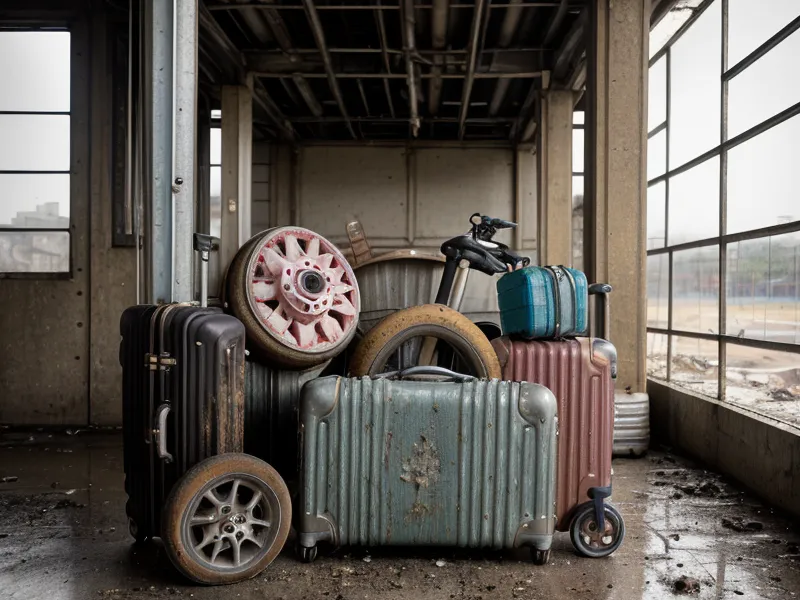
Indianapolis winters make the wear worse. Road salt and slush work into every seam on a bag, and that gray brine gets down into the ball bearing housing, dries out, and turns into a grinding paste. Add a decade of stray carpet fiber and hair picked up from one gate to the next, and a wheel doesn't fail quietly — it seizes.
Sitting on the garage floor with the bag between my knees, I was looking at a suitcase that had cost three hundred dollars three years earlier. The frame was solid. The zippers still worked fine. But the wheels — the part that actually makes a bag a tool instead of a box you drag — were finished. Landfill or surgery were the only two options on the table.
Is Cleaning Ever Enough?
The internet is full of well-meaning advice involving WD-40 and compressed air. Save yourself the trouble — if you've been flying every other week for years, spraying lubricant into a seized wheel just turns the debris inside into sticky sludge instead of removing it. By the time a wheel screeches, the housing underneath is usually already compromised, and no amount of grease convinces warped plastic to roll straight again. The fix isn't a clean-and-hope job. It's a full housing replacement.
Not every wheel problem is a Sunday-with-a-drill problem, to be fair — some can be limped through until you're home, and some have already crossed into workbench-and-parts-order territory. Mine had crossed that line weeks before I admitted it, which is usually how it goes. Most mid-range bags — the kind bought because they were "a good deal" — use rivets to hold the wheel housings in place, and rivets aren't meant to be opened twice. Getting them out means a drill, a steady hand, and the annoying discovery that a quarter-inch bit is just slightly too big for the rivet head, which is a good way to mar the plastic housing if you're not careful.
Once the factory rivets were out, the reason for the screech was obvious. A ring of hair and grit had wound itself around the six-millimeter axle, tight enough to have effectively welded the wheel to the housing — the kind of buildup no amount of spray lubricant was ever going to reach.
Building Wheels That Actually Hold Up
If you're already drilling out rivets, don't put the same hard plastic wheels back in. Stock wheels on most bags are loud and pass every bump in the sidewalk straight into your wrist. Polyurethane wheels — the 82A durometer kind, essentially high-end inline skate wheels — absorb far more of that shock, and they turn a rattling bag into something closer to silent.
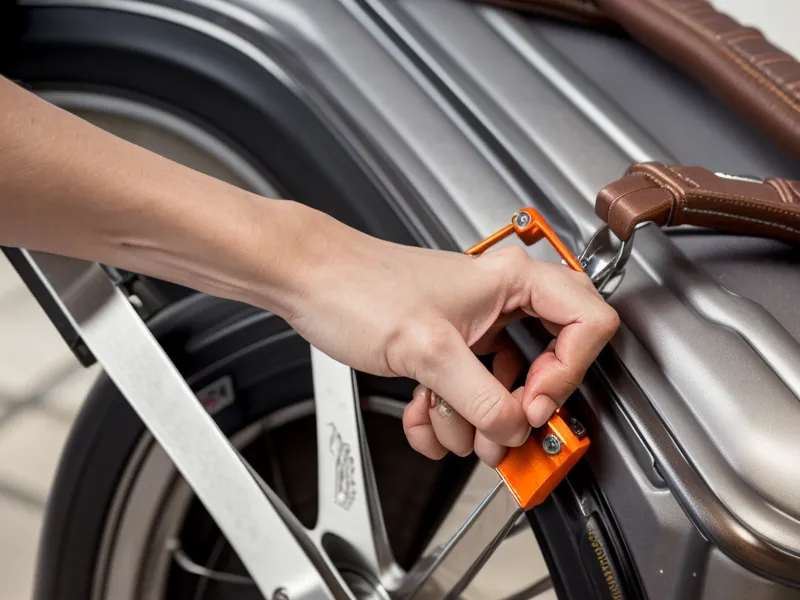
For bearings, a standard 608RS size does the job — it's the same size used in skateboards and higher-end luggage alike, and it's sealed, so salt and airport grime have a much harder time working their way in. Swapping the six-millimeter axles for high-tensile bolts running on a four-millimeter hex key means the whole assembly stays serviceable going forward. If a wheel gets gunked up again down the road, it's a five-minute fix with a multi-tool while waiting on a rideshare, not another trip to the landfill.
Comparing Briggs and Riley vs Travelpro for Heavy Business Use a while back, I noticed the pricier line skips rivets entirely in favor of screw-in axles — not to seem fancier, but because their engineers expect the wheels to wear out and want a repair to be possible instead of forcing a whole new tier of bag on you. Gate-checking doesn't do a repaired wheel any favors either — a rough handoff on the tarmac is enough to crack a housing you just fixed, though that's its own topic for another time.
Five Weeks Later, Nobody Notices My Bag
About five weeks and a dozen or so flights after the repair, the difference stopped being something I had to think about. On a Saturday, I test-rolled the bag down Massachusetts Avenue, weaving through the arts-district foot traffic, listening for any hitch — nothing, just a clean, quiet track across every sidewalk seam.
The real test came at baggage claim a week later. I spotted my bag from thirty feet out before it even reached me on the belt — no ribbon tied to the handle, no busted zipper pull to flag it, just the way it sat and rolled differently than every other black bag circling past it. That's when the repair stopped feeling like a fix and started feeling like an upgrade.

Twenty bucks in parts and an hour on a Sunday afternoon — that's what the whole job ran. Set that against three hundred plus for a replacement bag, and the math isn't close. The bigger win is knowing exactly how the wheels are put together and exactly what they're rated for, instead of hoping a new box off the shelf holds up any better than the last one did.
Whether you land on hardshell or softside is a completely separate argument I've made elsewhere, and wheel failure doesn't care which shell you picked — the only carry-ons still rolling after a year on the regional circuit can still end up with a seized wheel eventually if you fly often enough. Pitted, flat-spotted, or screeching wheels are the signal to check before you write off an otherwise good bag.
Luggage is a tool, not a mood — a kitchen knife earns a sharpening, a daily driver earns new tires, and a good carry-on earns the hour it takes to swap out four wheels. The lesson that stuck with me isn't drill-your-own-bearings-out; it's simpler than that: before you assume a bag is dead, find out what's actually broken. Wheels almost never mean the frame is done, and a screech in an empty terminal doesn't have to be the last sound that bag makes.