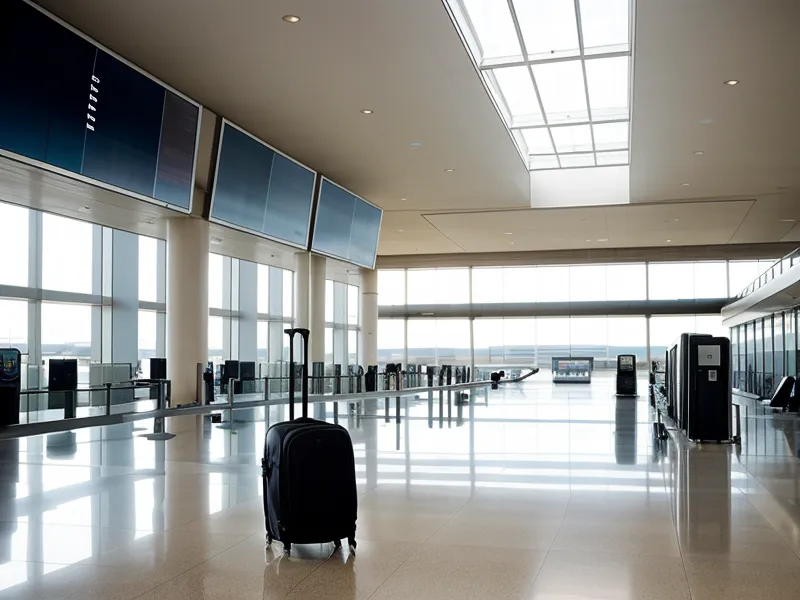
The person walking into the meeting doesn't necessarily have to be the same person who wheeled a suitcase through three terminals to get there. It's a fair question for anyone whose calendar runs on business travel every other week, and it's the one buried underneath every conversation I have about shipping services, luggage forwarding, and the general travel logistics of getting yourself — and your good suit — to the same city on the same day without either of you looking wrecked. I'm not going to answer it in one line, because the honest answer depends on the trip, the airline, and how much you trust a stranger with your garment bag. But it's worth sitting with for a second before you default to checking a bag like everyone else at the gate.
The Real Reason I Stopped Rolling My Own Bag to Big Pitches
Somewhere around my worst run of gate delays, I started treating the checked-bag-versus-carry-on question as a math problem instead of a habit. Whether shipping wins that math mostly comes down to how many cities are on the itinerary and how much margin you have if a flight slips — a calculation I've laid out in more detail elsewhere, but the short version is that the more the trip depends on you showing up composed, the more it tips toward sending the bag ahead. Before I got there, I tried the workaround everyone tries first: a backpack-style hybrid carry-on that was supposed to solve everything by turning a suitcase into something you wear. Every item in it sank straight to the bottom within a day, and I spent one entire layover excavating a phone charger from underneath a week of dress shirts. I also remember speed-walking through a connection at O'Hare, gate H7 already boarding, dragging a bag behind me that I hadn't so much as glanced down at since the jet bridge — a strange thing to admit, given how much I've written about why gate checking your carry on ruins your wheels and zippers.
How Does Luggage Forwarding Actually Get Your Bag From Your Door to the Hotel?
A shipping pickup is almost anticlimactic once you've watched it happen. On my last trip, a courier took the case straight from the driveway while I was still finishing slides in the back room — the one with a strip of laminate floor kept clear under the window specifically so a spinner can roll end to end without clipping anything, a pegboard of salvaged wheel axles and zipper pulls from bags that didn't survive testing, and a rack along the back wall holding whatever's currently in rotation. From there the case answers to a tracking number instead of a gate agent, and it skips the entire liquids fight — the TSA 3-1-1 rule simply doesn't apply to something that never goes through a checkpoint, so a full-size shampoo bottle and a bottle of wine for a client both ride along without incident. Your packing system gets simpler too, since you're not rationing a week of shirts around the same cube arrangement built for carry-on limits, and the zipper construction I usually worry about — the thing that tends to fail first under gate-check strain — stops being the variable that has me checking the bag every hour of a connection. Even the expansion gusset some cases build in for a bulkier trip stops mattering, because the whole point of shipping is a box doing the traveling, not a spinner.
Should You Ship Straight to the Hotel, or Somewhere Else Entirely?
Shipping straight to the hotel is the default advice on every glossy travel site, and it's not wrong so much as incomplete. Some of the bigger convention properties have started treating guest packages as their own small profit center, and a few will charge you twenty or thirty bucks a day just to let a case sit in a back room — which is a racket dressed up as a service. Local FedEx Office locations and dedicated business receiving centers within walking distance of a hotel tend to run tighter than a distracted bell desk, if only because storing packages is the entire job instead of one more thing layered onto checking in a lobby full of guests. That's the version of destination logistics I trust now: confirm the receiving policy before the case ships, ask specifically about holding fees, and pick the option that treats your bag like the actual point of the errand instead of an inconvenience.
The Morning-Of Panic You're Actually Trying to Avoid
Nobody ships a bag ahead because they enjoy paperwork. They do it to avoid standing at a bell desk at seven in the morning while someone flips through a delivery log that doesn't have your name in it. That panic is avoidable with about two minutes of homework: get a tracking number before the case leaves your house, confirm the exact address and the recipient name the receiving center expects, and call once to make sure the package cleared its front door rather than assuming a tracking update means the same thing as a human confirming it. Marcy Bellew, a reader who's kept emailing me since a piece on regional-jet bag sizing, flies a healthcare sales route that lines up almost exactly with my own schedule, and questions like this one — has the box actually arrived, not just left the depot — are usually the ones she pushes back on hardest, because her margin for error at a client site is about the same as mine.
The Marble-Counter Difference: What Shipping Actually Buys You
Walking into a hotel lobby without having wrestled a bag through three terminals changes the whole first ten minutes of a trip. There's no film of effort to shake off before you get to the front desk, and the case is usually already logged by the time you reach the concierge to sign for it. The bigger win, though, is what happens to a suit that would otherwise have spent the flight folded into a garment sleeve and jammed into an overhead bin — it arrives hanging, not pressed into the shape of somebody else's rollaboard, which matters more than any wheel or zipper spec when the meeting starts in ninety minutes. Overseas, the payoff compounds, which is the whole argument I made when I wrote about using Luggage Forward for international business trips to save time, but even a short domestic hop earns back the hour you'd otherwise spend circling a baggage carousel.
Is Any of This Worth It for a One-Night Trip?
None of this is worth the trouble for an overnight run to a client thirty minutes from your own airport. For those quick hits I still grab my best lightweight carry on luggage for lifting into overhead bins, because speed beats sophistication when you'd be back home before the case even cleared a shipping depot. It's also where a lot of the usual luggage debates — hardshell against softside, wheel-construction tiers, whether a warranty is worth the premium, whether the top trim level of a product line is worth chasing — still apply, since you're the one lifting and rolling the thing. Roz Henriksen, who works the same regional patch I do and flies just as often, will argue for an hour that a shell built to dent beats one that can shatter, which is a debate for a different post entirely, but it's the kind of argument that only matters when you're still the one carrying the bag.
What I'd Still Never Put in a Shipping Box
A laptop and the folder of materials for the actual pitch never leave my hands, no matter how good the tracking number looks. Some things are still too personal, and too irreplaceable if a routing error sends them to the wrong city, to trust to a box. The heavier aluminum-shell cases I'd normally think twice about, mostly because of what they do to a shoulder when you're the one lifting them into a bin, stop being a real drawback once a courier is doing the lifting instead, so shipping is also where the weight-versus-capacity argument gets a lot less interesting. And there's no field repair to improvise either — no zipper to coax back onto its track in a hotel bathroom before an early call — because a bag that's been driven instead of gate-checked usually never asks for one.
The rule I actually use is simpler than any of the individual tradeoffs: if the meeting is the entire reason for the trip and there's at least a few days of runway before it, the bag ships and the carry-on stays home. If it's a same-day up-and-back, the carry-on wins every time, wheels and zippers and all. Everything else in this discussion is commentary on that one decision.