
One suitcase in my closet still rolls smooth across the tile at Chicago Midway, six months into another stretch of business travel. The bag it replaced needed new wheels by month three.
This site runs on affiliate links. If you end up booking a luggage shipping service or buying a bag through one of mine, I earn a small commission at no extra cost to you. Everything mentioned here got dragged, rolled, or shipped through an actual business trip before I would write about it — that is the only qualification that matters to me.
The Trade Show Load That Broke the Carry-On Rule
Eleven years of every-other-week flying taught me the 22 x 14 x 9 rule the hard way. That dimension set is the standard domestic carry-on size limit, the line between walking off a plane empty-handed and standing at a machine that eventually spits out your property. Then my territory expanded. Sample cases and display kits for regional trade shows joined the laptop and three days of shirts, and none of it was fitting into an overhead bin no matter how I folded it.
A Briggs & Riley still handles solo runs without complaint, heavier than it needs to be and priced like it knows its own reputation, and its CX-2 compression buys another shirt or two before anything strains at the zipper. That was never going to swallow a full trade show kit, though. Checking that kit meant playing the gate-check lottery: hand over a bag built for carpeted hotel hallways, get it back looking like it lost an argument with a conveyor belt. Testing Luggage Forward for a conference in Denver, three suits and a full display kit riding along, felt less like an upgrade and more like surrender. It turned out to be neither.
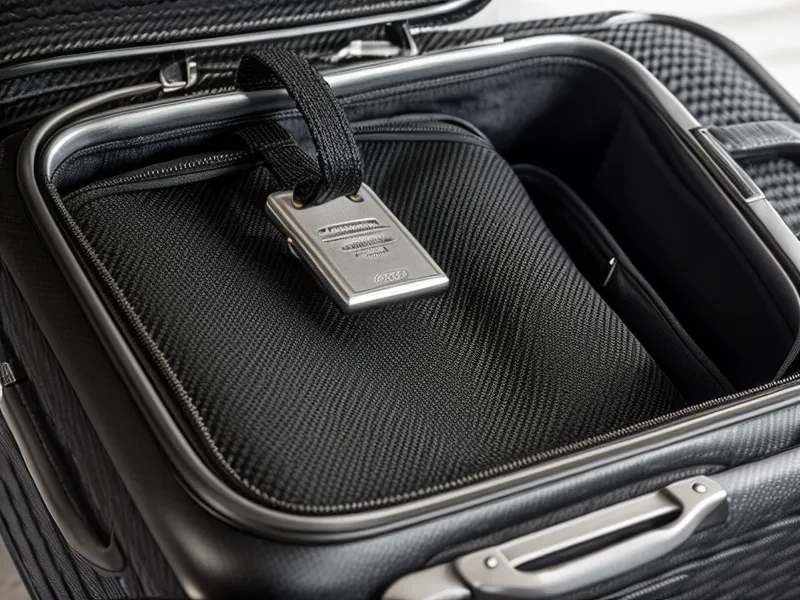
Shipping Versus Carrying, Item by Item
The mechanics are almost insultingly simple: you pack your bags, a driver collects them from your house, and they are waiting at the hotel before you land. It sounds like a service for people who own yachts. For someone whose job pays for the flights and whose marriage pays for the family vacations, it reads more like a sanity calculation than a luxury.
This whole site started because a friend of mine kept asking which carry-on to buy. He trains for half-marathons along the Monon Trail at 54th Street most mornings, and travel gear is nowhere near his specialty; his one real attempt at business travel involved a soft duffel with a shoulder strap that had him wincing by the second terminal. Stories like his are exactly why I wrote down the reasons I stopped dragging samples through O'Hare in the first place. Some loads were never built for a human shoulder to carry.
Scheduling around a shipping service takes a different kind of planning than scheduling around an Uber. My first attempt assumed a pickup could happen Sunday night for a Monday morning flight. Ground transit needs a lead time of roughly three days on most domestic routes, so that assumption cost me an early, stressed drop-off instead of the calm handoff I had pictured. Carry-on culture rewards packing an hour before the Uber shows up; shipping punishes it.
Luggage Forward backs its shipments with a 200% on-time guarantee; if a bag arrives late, they refund double what the shipment cost. Airlines lose bags by the millions and hand back a voucher worth about one ham sandwich in apology. A company willing to pay you back twice for missing its own deadline is a different kind of promise, closer to a contractor who covers your hotel bill for showing up late than one who just apologizes.
Walking Past the Carousel With Empty Hands
Landing in Denver usually meant the same power-walk to the carousel, then the shoulder-slumping wait behind a rental-car line's worth of other exhausted travelers. Carrying nothing but a laptop bag off that particular flight felt almost illegal, the good kind that comes with a shorter walk to the rental counter. No forty-pound spinner to hoist onto an X-ray belt, no fighting for the last six inches of overhead space, no watching the overhead bin gamble play out for the row behind me.
Passing the baggage claim felt almost staged: a family wrestling three strollers and four suitcases at the rental counter made the whole scene look like a logistics exercise nobody had signed up for. My bags were already in the hotel room, arranged like they had been there the whole time. Cheating felt like the right word for it, even though nothing about the transaction broke a single rule.

Why Short-Term Rentals Break the Shipping Model
Shipping ahead works beautifully for anyone landing at a hotel with a front desk that can sign for a package. The digital nomad crowd hits a different wall entirely. Anyone bouncing between Airbnbs every couple of weeks lacks the one thing a shipping service actually needs at the destination: a person with a fixed address who will be home during a four-hour delivery window.
Nobody plays concierge for their own suitcase quite like someone managing a short-term rental. Being present for a four-hour pickup window and a four-hour delivery window eats a full day, a cost a hotel absorbs invisibly but a rental never does. That gap is why I point younger colleagues toward a dependable Travelpro and the 3.4-ounce liquid rule instead of a shipping label, unless they have a fixed base or a host who can sign for a box.
When the Math Actually Works
None of this comes cheap next to a twenty-five-dollar checked-bag fee, and a single carry-on flyer should probably stop reading right here. The comparison changes shape once a checked bag crosses the standard linear-inch limit most airlines set around 62 inches — golf clubs, skis, a stack of trade show samples — because airline overage fees start looking like extortion past that point. The travelers who benefit break down roughly into four types: the carry-on purist who never checks a bag and never will, the standard checker who pays the fee and hopes the zippers survive the carousel, the heavy hauler moving oversized gear or packing for a multi-week stay, and the shipping convert who has decided time is worth more than the shipping premium. Most business travelers sit somewhere between the second and fourth group, and the border between them is really just a question of what an hour of your own time is worth.

So Which Trips Get Shipped?
A quick overnight to Chicago still goes to my LEVEL8 hardshell, wheeled out and thrown in a rental trunk without a second thought, too short and too light a trip for shipping to make sense. Anything involving a full display kit, multiple suits, or gear that would otherwise eat a checked-bag fee and an oversize surcharge goes to Luggage Forward instead, three days ahead of the flight, every time. The dividing line has nothing to do with loyalty to one method over the other; it comes down to whether the load in front of me would survive a gate check or just add another thirty minutes to a day that already has enough of those.
That is the whole test, and it does not need a spreadsheet: if the bag can survive an overhead bin and a rental car trunk, carry it. If it cannot, or if getting those thirty minutes back at the carousel matters more than the shipping cost, send it ahead. The rest is just remembering to check when the service is a lifesaver before locking in a departure date that cannot move.