
Two and a half inches. That's the entire promise behind the compression system built into the Briggs & Riley CX-2, the business carry-on I now recommend over every other bag I've flown with, and it sounded exactly like the kind of number a luggage brand invents to sell you a ratchet. Eleven years of every-other-week flying has made me suspicious of any bag that claims to hand you extra room for free, so this isn't a brochure rewrite — it's the real-world, question-and-answer review readers actually asked for, starting with whether that compression is even real.
Quick housekeeping before the questions start: this site runs on affiliate links, and if you buy luggage or a shipping service through one of mine, I earn a small commission at no extra cost to you. A bag like the Briggs & Riley Baseline doesn't make this list because a brand rep mailed it to me — I bought mine, and I've dragged it through Minneapolis slush and Atlanta humidity enough times to tell you where it disappoints, not just where it shines.
Does the Briggs & Riley CX-2 Compression Actually Create Usable Space?
For years, I bounced between two mid-tier options: a Travelpro that held up fine but never gave me an inch of extra room, and a stretch with aluminum-frame LEVEL8 models that saved weight but dented at the first hard corner they met. Neither one solved the actual problem, which is that I'm a chronic over-packer for three-day trips and always want the extra shirt just in case.
Short answer on the compression: yes, it's real, and it's the one feature on this bag that isn't marketing fluff. You unzip the sides, pull up on a pair of internal straps, and a ratcheting bracket lets the shell grow by about two and a half inches so you can stuff in the overflow. Push the straps back down and the bag clicks back to a size that clears the standard US domestic carry-on size limit, which is the only number that matters when a gate agent is eyeing your bag like it owes her money.
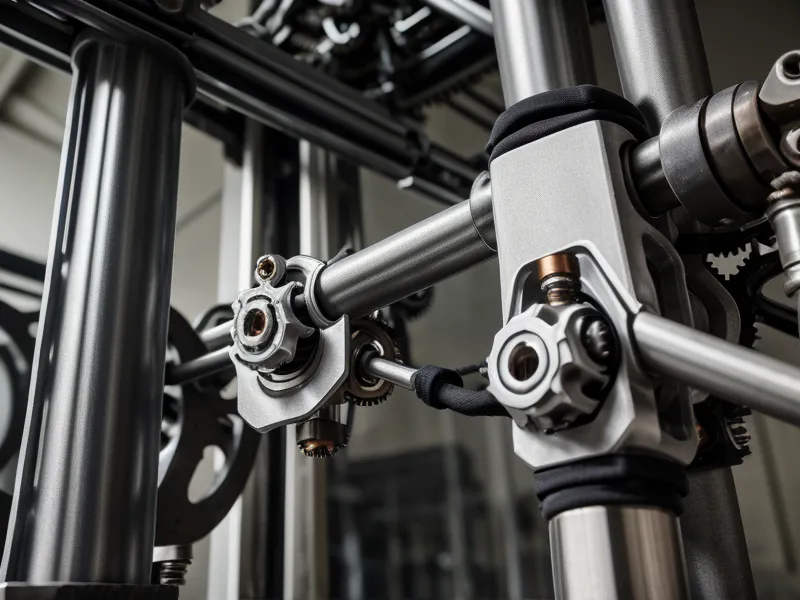
My colleague Roz Henriksen, who flies about as often as I do, asked the obvious follow-up: does expanding the bag mean it stops fitting the sizer? No — that's the entire point of the ratchet. It grows for packing, then compresses back down for boarding, so the bag that swallowed an extra outfit at the hotel is the same footprint the gate agent measured on the way out. Roz still smuggles a second tote past the personal-item rule on every flight regardless, which is a different problem than the one this bag solves.
If you want the full mechanical history of how Briggs & Riley's expansion hardware has evolved across their CX lineup, that's a deeper rabbit hole than this review needs. What matters here is what the ratchet does inside this specific bag, on a real trip, when you're the one kneeling on a hotel floor trying to close it.
The Trade-Off Nobody Mentions: A Bumpy Packing Surface
Here's what the glossy product photos don't show you: that ratcheting hardware lives inside the shell, so you lose some of the flat, empty-box feeling you'd get from a hollow hardshell. Picture a kitchen drawer organizer — it makes the drawer more useful, but the organizer itself eats a little of the space. If maximum raw durability for a professional is your priority, the bumps are a fair trade; if you're used to a cavernous empty box, they take a minute to get used to.
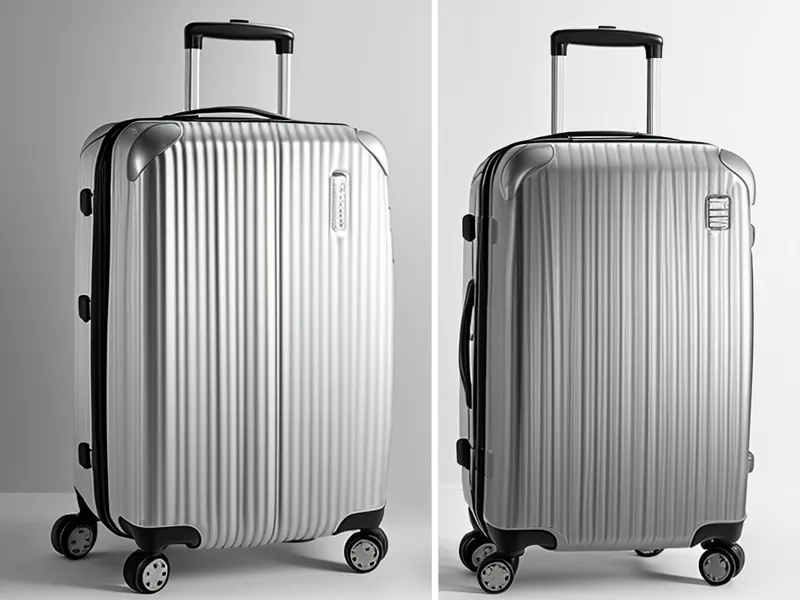
Packing around the brackets took some relearning, and there's a whole separate system to packing a bag like this well — socks and chargers near the hardware, blazers flat on top, everything else compressed with body weight rather than finesse.
A reader named Marcy Bellew, who's emailed me questions since a buying-guide post a while back, pushed me on this exact point — she doesn't trust a recommendation unless it comes with an actual failure attached, so here's one. I once tried to force three heavy sweaters into the compressed state for a trip to Minneapolis and physically could not get the straps to click. The CX-2 is strong, but it isn't a hydraulic press. I pulled a sweater back out and wore it through security instead. The system buys you roughly 20% more room, not infinite room, and pretending otherwise is how you end up in a security line wearing three layers in July.
How Much Abuse Can the Fabric and Wheels Actually Take?
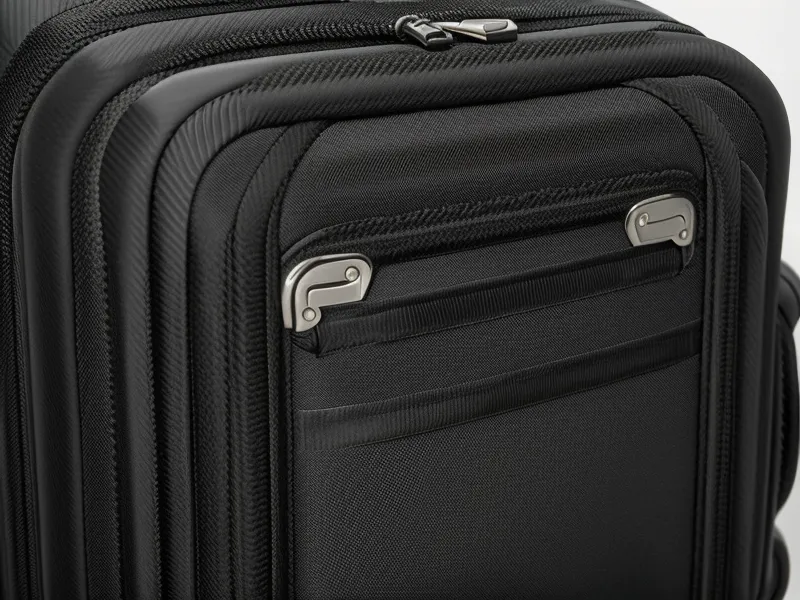
The 1680D ballistic nylon on this bag still looks close to how it looked the day it arrived, which isn't something I can say about the corners on most soft-sided bags I've owned. Most of them start pilling or fraying at the edges long before the wheels give out. This one wears like furniture, not luggage.
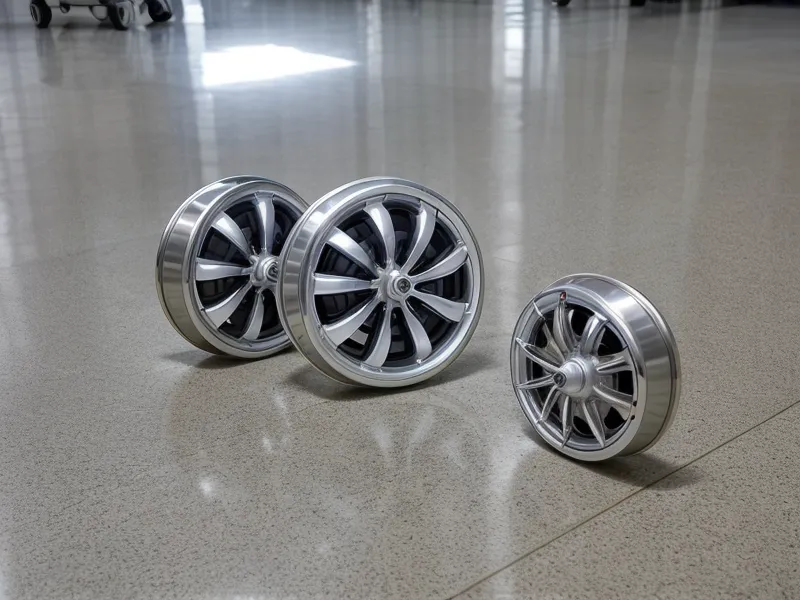
Wheels are where cheap bags reveal themselves fastest, and I've got the wreckage to prove it: a no-name spinner I bought off Amazon on a whim cracked a wheel casing on its second trip, and I spent the rest of that connection dragging it sideways like a shopping cart with a bad caster. The four wheels on the CX-2 track straight instead of drifting, which sounds minor until you've fought a bag that pulls left across an entire terminal. Wheel construction is its own rabbit hole — outboard, sealed hubs like these simply outlast the exposed axle-and-bearing setups on discount bags — and gate-checking any bag regularly, even a good one, is still the fastest way to wreck a set of wheels.
Zippers matter just as much as wheels. Cheaper coil zippers have seized on me mid-trip before, and working a stuck zipper back onto its track with whatever's in your pocket is its own skill that I'd rather not need. Nothing on the CX-2's zipper pulls has hung up yet, through gate-checks, jetway rain, or getting buried under someone else's rollaboard.
Weight, Hardshells, and the Case for a Heavier Bag
At 10 pounds empty, this bag is noticeably heavier than the minimalist hardshells sitting next to it in an overhead bin, and that weight is a real cost if you're already close to a carrier's limit. Hardshells get a reputation for being fragile in cold weather, but I don't buy the blanket version of that claim — I once pulled a hardshell out of a rental car trunk in Chicago in February, the metal frozen solid, braced for a spiderweb of hairline cracks, and found nothing. Aluminum shells like LEVEL8's dent rather than crack when they take a hit, which is a different failure mode than what a softside does, not automatically a worse one.
What you're paying the weight tax for here is structure: a 40-pound bag landing on top of this one in a gate-check pile doesn't cave it in. If ultralight is your only priority, chasing every ounce for a strict regional-jet weight limit, there are dedicated lightweight carry-ons built around shaving grams instead of bolting in a compression ratchet, and that's a fair trade for someone who packs light by nature instead of by force.
Regional Jets, Business Travel Questions, and Everything Else Readers Send
Marcy also asked whether this bag actually clears the smaller overhead bins on a regional jet, since a bad experience with the wrong dimensions is what got her writing to me in the first place. Compressed down, it does — the size that clears a standard mainline sizer also clears the tighter regional bins, though anyone flying regional routes regularly should double-check their specific aircraft rather than take any single reviewer's word for it.
Suits are their own category entirely. A compression carry-on flattens shirts and sweaters just fine, but a suit that needs to survive a same-day meeting really wants a dedicated garment bag, not a spinner with a ratchet bolted into the side.
Traveling with sample cases or oversized gear is a similar story: past a certain size, you're better off shipping ahead than fighting a bag through security, which is exactly why I keep using a service like Luggage Forward for trade show trips instead of trying to wheel everything myself. The same logic works in reverse — shipping a bag straight to a hotel before a big meeting costs more than checking it, but it means you're not the one praying at baggage claim the morning of a pitch.
Here's Who Should Buy It — and Who Should Skip It
For someone flying every other week, the value isn't really in the ratchet — it's in the lifetime warranty, which explicitly covers damage an airline does to the bag, not just factory defects. That's a rare enough guarantee in this category that it changes the math on the price entirely; it stops being a onetime purchase and starts being the last carry-on decision you make for a long while. Briggs & Riley earns its premium tier for exactly that reason.
Someone who flies once or twice a year doesn't need any of this. A Travelpro will do the job fine at a fraction of the commitment, and there are tiers within that same lineup if you want something closer to the CX-2's feature set without the full jump in price. But for the every-other-week grind, where a bag failing mid-trip is a real business problem and not just an inconvenience, the CX-2 is the only expansion system I've used that adds room without turning the bag into a shapeless duffel by Thursday. It's built by people who clearly hate gate-checking as much as I do — the full rundown is below if you want to compare it for yourself.
Briggs & Riley
Pros
- ✔ CX-2 system genuinely fits an extra outfit while maintaining legal carry-on dimensions
- ✔ Lifetime warranty covers damage caused by airlines, which is a rare safety net
- ✔ 1680D ballistic nylon stays looking new after months of jetway abuse
- ✔ Outboard wheel design provides more interior flat space than typical spinners
Cons
- − At 10 lbs, it is noticeably heavier to lift into overhead bins than hardshell rivals
- − Internal compression hardware creates a non-flat packing surface
- − Premium pricing makes it a significant investment for casual travelers