The slider stopped three inches from the top, no warning, no grinding sound, just teeth that quit moving. That's usually the first sign something's wrong with a Travelpro zipper, and it tends to happen at the worst possible moment: a suit and three days of shirts already packed, a flight not far off, and a bag that suddenly won't close. Business travel wears a zipper down in ways a showroom demo never predicts, and it takes more of the daily punishment than wheels or handles ever do. Most of what gets called a broken zipper on a Travelpro bag isn't broken at all. It's stuck, which is a cheaper and far less permanent problem.
My neighbor Denny spent years as a logistics consultant before going fully remote, and he has a habit of looking at broken luggage the way an engineer looks at a bridge under load. He was standing in the kitchen the day that same Platinum Elite came out of the closet to test the fix in this article, and his read on the situation was blunt: most people don't have a broken zipper, they have a system that got asked to do a job the packing didn't leave room for. He's also the one who pointed out that yanking on a stuck slider is the fastest way to turn a five-minute fix into a four-hundred-dollar replacement, a number he arrived at the way he arrives at everything, by doing the math out loud.
A Stuck Zipper Isn't a Broken One
A stuck slider is almost never a sign of damaged hardware. Travelpro builds around YKK's RC coil zippers, and the construction of that hardware is its own subject, worth a full conversation somewhere else, not here. What matters mid-trip is simpler: the coils are flexible enough to be nudged back into line instead of forced. When a slider stops dead, it's one of two things happening. Either something physical is caught in its path, usually the interior lining pulled up into the mouth of the slider by an overstuffed bag, or the coils themselves have drifted out of alignment. Neither one means the zipper is finished. Both mean stop pulling immediately.
Getting to that root cause almost always traces back to how the bag got packed in the first place. A disciplined packing system leaves the interior lining alone because everything has a place; cramming leaves it wherever there's room, which is sometimes directly in the zipper's path, and an overstuffed bag under bin-fitting pressure only makes that tension worse.
A sale-rack Samsonite hardshell taught me the alternative isn't automatically safer. It came from an outlet (the kind of purchase that looks smart under fluorescent showroom lighting and less smart eight months later), and the corner seam split open after about eight months of ordinary handling. There was no coil to nudge back into place and no field fix for a cracked shell, just a spreading crack until the bag was done for good. Hardshell versus softside is a bigger question than zippers alone, and that case has been made at length elsewhere, but on the narrow point of what fails first under real business-travel use, a softside bag with a good coil zipper has outlasted every hardshell tried so far.
Put the Pencil Down
Skip the pencil trick, even though half the internet swears by it. Rubbing graphite onto the coils lubricates them for about a day, and then it starts trapping grit, every bit of jet-bridge dust and roadside salt the bag has picked up gets ground into the teeth instead of brushed off, and the zipper gets harder to pull, not easier, over the following weeks. Gate-checking ruins zippers for a related reason, the same piece that covers what it does to wheels gets into this too, exposure is exposure, whether it comes from a lubricant holding onto grit or a bag getting tossed onto a jet bridge with nothing protecting the zipper track.
Look for a physical obstruction before reaching for anything meant for a bike chain. Nine times out of ten it's the lining, pulled into the slider by an overstuffed bag, and the fix is mechanical rather than chemical: pull the fabric away from the slider while walking the zipper backward in small, deliberate movements. It's a game of millimeters, not force.
Fixing It With What's Already in Your Bag
The lip balm trick worked, technically, the one time it actually mattered, a stuck slider, no repair kit, a flight not far off, and a tube of waxy cherry-scented lip balm rubbed straight into the teeth until the slider moved again. It also left a greasy residue that took three more trips to fully clean out of the surrounding fabric, which is the kind of trade a person only makes once. A hard paraffin zipper wax, the kind made for drysuits, does the same job without leaving anything sticky behind for grit to grab onto, and it now lives permanently in a side pocket instead of getting left at home.
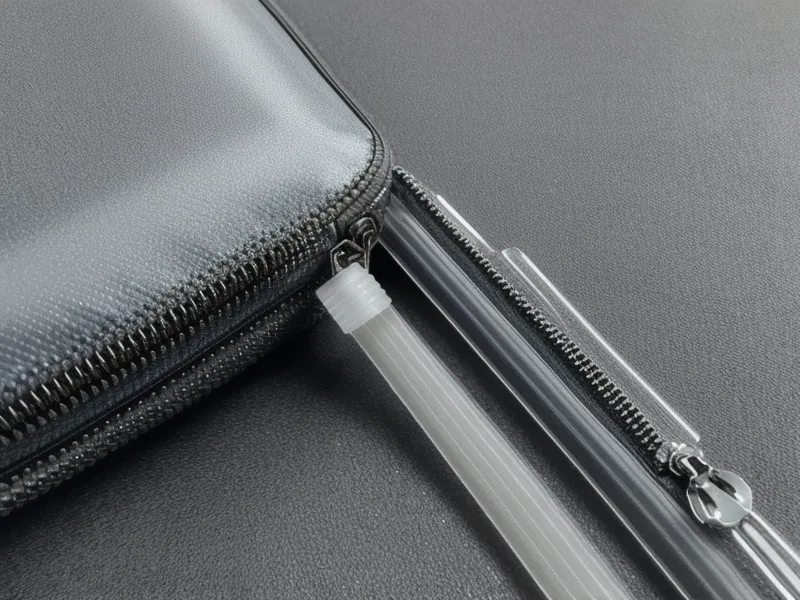
Fixing a stubborn slider that isn't caught on fabric comes down to a wiggle and reset. Because the coil is flexible by design, pulling the two sides of the zipper tape taut and moving the slider back and forth in small, rapid increments often re-seats it without any lubricant at all. The goal isn't forcing it past the stuck point, it's vibrating it back toward the center of the track. If the coils have actually separated behind the slider, sliding the pull all the way back to the start of the chain usually clears it, the same way clearing a paper jam means going back to the beginning instead of pushing forward.
When Is It Time to Stop Fixing a Travelpro Zipper?
A reader named Clifton emailed a while back to argue that floor debris is an engineering problem, not a preference, which is why he travels exclusively with a garment bag and refuses spinners on principle. He's not wrong about the zipper angle either, a garment bag's strain profile is different from a folded-suit softside, because the weight hangs instead of pressing against the lining, so a lot of the snag problems described here barely apply to his setup at all.
The Platinum Elite sits near the top of Travelpro's lineup, and how their tiers break down is a longer conversation than fits here, but the zipper hardware doesn't change much as the price climbs. The coil is the coil.
Wheel damage complicates the picture more than people expect, too, a bag with a worn or cracked wheel has usually been dragging sideways for months, putting off-axis stress on the zipper the whole time, which is worth checking if the same bag keeps sticking no matter how carefully it's packed.
That kind of stress shows up fastest on bags forced into tight regional-jet overhead bins trip after trip, the tighter the squeeze, the more the zipper takes on tension that the wheels and frame can't absorb, so guiding the slider by hand while clearing the lining as you go matters even more on those routes.
If the coils have genuinely burst and no amount of wiggling brings them back, which is rare, that's the point where a warranty policy stops being fine print and starts being the whole plan, lifetime-warranty terms vary enough between brands that it's worth checking before assuming a stuck zipper means a dead bag.
Ten weeks after that lip-balm fix, the same Platinum Elite still carried a faint waxy sheen on one pull that never fully buffed out, and it became the easiest way to spot the bag on a crowded carousel, no ribbon required, no scanning for a color half the other travelers picked too. That's the actual lesson in all of this: a zipper problem caught early and fixed by hand almost always heals into something barely noticeable, while one that gets forced or lubricated past the snag turns into a permanent weak point instead. The bag rarely needs saving from disaster. It needs someone willing to stop pulling for ten seconds and look at what's actually stuck.