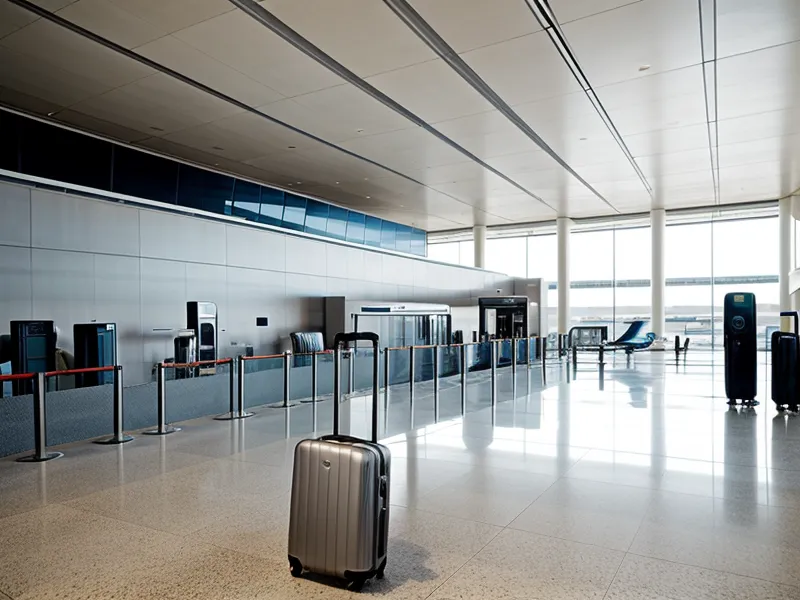
Ten millimeters is the width of the zipper coil on a YKK #10 — the gauge that separates carry-on luggage built for real business travel from a bag that only looks the part in a boarding line, and it's the first thing worth checking in any honest Travelpro review. Most buyers never check that number, which is exactly how a bag that photographs beautifully ends up shedding a zipper pull somewhere over Ohio. Durability in this category rarely announces itself on the outside.
Quick disclosure before the teardown continues: this site runs on affiliate links, so if you buy a bag or a shipping service through one of these, I earn a small commission at no extra cost to you. Every bag mentioned here has actually ridden in an overhead bin of mine on a real trip. That's the only qualification that matters.
Terminal A at Indianapolis International is where I found the limits of buying on looks alone. A sale-rack Samsonite hardshell, picked up at an outlet because it resembled bags costing far more, split clean along a corner seam about eight months in — naturally while I was jogging toward a gate that had already started boarding. The zippers were fine. The shell wasn't. Durability failures rarely happen where you're watching for them.
That experience sent me looking at what the people who actually live on airplanes carry, and flight crews are almost uniformly rolling Travelpro. There's a reason for that, and it has nothing to do with how the fabric photographs under fluorescent terminal lighting.
Why Flight Crews Trust Travelpro Carry-On Luggage
Travelpro was founded by a pilot, and that origin still shapes the product line: these bags are built for the 200-day-a-year grind, not the once-a-year vacation. A brand like LEVEL8 sells sleek aluminum-frame models that look sharp in a lounge, and the aluminum-shell-construction story behind those is worth its own deep dive elsewhere — the short version is that aluminum dents permanently where fabric just flexes and moves on (ask anyone who's watched a hardshell corner cave in on a jet bridge).
Weight is where the Maxlite 5 21-inch spinner made its case immediately. At 5.4 pounds, it's noticeably lighter than the hardshell it replaced, and that difference shows up in your shoulder by the fourth person in line waiting for a slow-mover to find their seat. It's the gap between hauling a cast-iron skillet and a good nonstick pan — one is a workout, the other is just a tool you stop thinking about. The weight-vs-capacity tradeoff behind that number deserves its own full comparison; here it's enough to know this bag chooses light over cavernous, which is the right call for anyone flying every other week.
Soft-side construction like this relies on ballistic nylon or a heavy polyester weave, measured in denier — essentially a rating of how much abuse the fabric shrugs off before it gives up. That weave handles getting shoved into a metal bin better than a hardshell, which just scratches and dents instead. The tradeoff is that soft-side fabric has give, so it's easy to overpack past the point of good judgment. Stuff it until the seams bulge and you've turned a carry-on into a wrestling match with the sizer at the gate, especially on the tight regional jet bins where overhead-bin sizing is already unforgiving.
The #10 Zipper Number Worth Knowing
That YKK gauge from the top is worth unpacking properly, because it's one of the only specs on a luggage tag that translates directly into real-world durability. YKK rates zipper strength by coil width in millimeters, and a #10 coil — ten millimeters of tooth — is the benchmark serious carry-ons are built around. A bag marketed as premium that specs a #5 or a #8 zipper instead is making a quiet cost cut, and it tends to surface at the worst possible moment of a trip, usually a stuck slider at security with a line building behind you. Zipper construction generally is a rabbit hole across brands, but that coil number is the one figure actually worth checking before you buy anything with a zipper on it.
Where the 22-Inch Rule Gets Fuzzy
The FAA carry-on limit runs 22 by 14 by 9 inches, and manufacturers play loose with it constantly, often excluding wheels or handles from the stated measurement. Travelpro is more honest about it than most, but even a technically legal bag can get flagged the moment you use the expansion zipper. Expanding a soft-side bag turns a daily driver into a moving van — great for hauling souvenirs home, a fast track to a gate-check on a full flight (the crew doesn't negotiate once the sizer comes out). Gate-checking a bag built for cabin duty is its own separate hazard for wheels and zippers, and it's worth treating as a real cost, not just an inconvenience.
For trips with sample cases, or anytime the bin fight isn't worth fighting, I've started routing bags through Luggage Forward, a door-to-door shipping service that functions like a cheat code for business travel. Their guarantee refunds double the shipping cost if a bag arrives late, which changes the math on riskier itineraries. It doesn't make sense for a single carry-on on a short hop, but flying a regional jet like a CRJ-200, where the bins are roughly toaster-sized, shipping ahead can save the whole trip. What happens on the receiving end — a hotel front desk holding a case until check-in, a concierge who's never handled a shipped bag before — is its own logistics wrinkle, and for a domestic conference trip it's rarely the dealbreaker people assume it'll be.
Travelpro Against the Premium Tier
Executive trips call for a different bag sometimes. Ahead of a client meeting that needed a sharper look, I borrowed a friend's Briggs & Riley, and it's genuinely well engineered — a lifetime warranty that actually covers airline-handler damage, which is a subject worth its own article since it changes how you should think about premium pricing entirely. Their CX-2 compression system deserves the same treatment; the short version is it buys you a shirt or two of extra room without fighting the zipper closed, which makes the Travelpro look a little primitive by comparison.
Where the Maxlite actually loses ground is internal organization — it's a big open bucket with no built-in suiter or compression, so anything you don't manage yourself shifts around in transit. A packing-cube system solves part of that, the same way a drawer organizer solves a messy dresser, and it's a subject that deserves its own full walkthrough rather than a paragraph here. I've unzipped a bag at midnight before a 5am client meeting and found the dress shirts still lying flat, which the Maxlite's bare interior can't promise on its own — you have to build that outcome yourself. A correspondent of mine, Clifton Pryke, sidesteps the whole debate: he travels exclusively by garment bag and treats floor debris on wheel bearings as an engineering problem, not a matter of taste, which is one way to opt out of the spinner argument entirely.
Repairability is where Travelpro quietly wins long-term. Replacement wheels and handles are easy to find online, and a wheel swaps out with a screwdriver in about the time it takes to board a flight. My neighbor Denny Abara, a former logistics consultant, would call this a load-tolerance problem before he'd call it a design flaw — everything about a bag, to him, is a system with a failure point somewhere. Wheel-construction quality generally is worth its own dedicated piece; the practical point here is that a screwdriver fix beats a bag you have to replace outright. A stuck zipper mid-trip is similarly fixable in the field rather than a trip-ending disaster, and Travelpro's simple, low-fuss construction is exactly what makes that kind of repair realistic at a gate instead of impossible. LEVEL8's aluminum frames look sharp, but dent that frame and it stays dented — there's no field fix for that the way there is for a fabric bag.
Picking Your Tier: A Decision Rule
Sorting out which tier fits your travel pattern comes down to what you're actually optimizing for. The workhorse tier, Travelpro's lane, rewards light weight and cheap, fast repairs over internal polish. The executive tier, where Briggs & Riley lives, makes sense when the company's paying and your suits need to arrive crisp without you managing it. The modernist tier — LEVEL8 and bags like it — gets you that hardshell click and quiet wheels, provided a permanent scuff doesn't bother you. And the strategist option, shipping through something like Luggage Forward, is for the trips where the airline's own logistics have become the actual headache. One caution across all four: a trusted name on the outside tells you nothing about which internal tier you're actually buying into, and it's the cheaper line in any brand's catalog where the wheels and zippers get quietly downgraded first — Travelpro's own lineup is not exempt from that rule.
The Long-Term Verdict
Through a full mix of seasons now — a mid-winter snowstorm, the humid mess of early spring in the Midwest — the Maxlite has picked up its share of stains, coffee mostly, and the handle has a bit more play in it than it had new. The wheels still turn out the same smooth note rolling across polished terminal stone, without the wobble that warns of a bearing on its way out.
What's changed is that I no longer crave the rigid protection of a hardshell the way I used to. Soft-side flexibility fits how I actually travel — it squeezes into a bin that's technically too full, and it takes a last-minute folder in the front pocket without unzipping the whole thing. Just remember the tradeoff runs both ways: because it can hold more, you'll be tempted to pack more, and your lower back is the one that settles that bill when you're hoisting it overhead for the third time in a day.
If you're still rolling a bag that makes you nervous every time it hits a curb cut, it's time to replace it before it fails somewhere less convenient than your own driveway. Check out the latest Travelpro models here if the workhorse tier fits your travel pattern, or look at the Briggs & Riley options are here if you're ready to invest in something built to outlast the rest of your career. The hardshell-versus-softside argument is bigger than one bag, and my running list of the only carry-ons still rolling after a year is where that argument actually gets settled. Safe travels, and may your overhead bin always have room left in it.