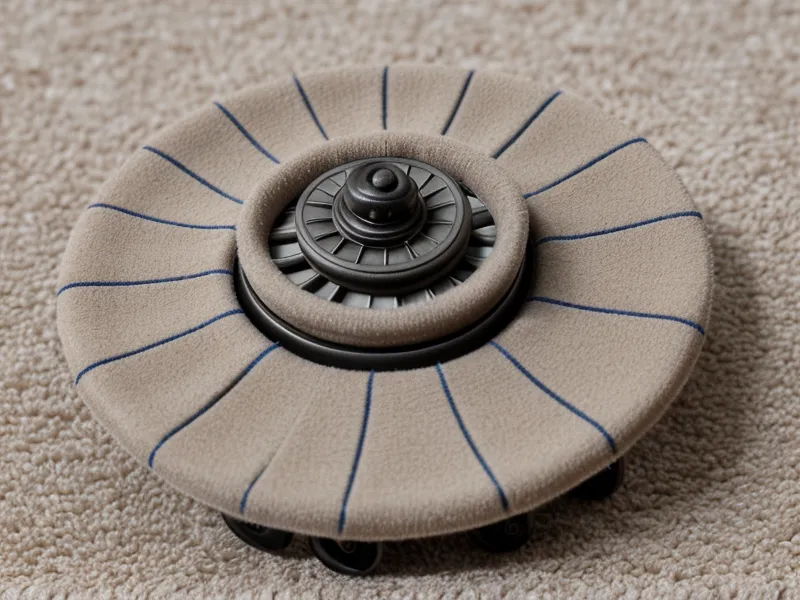
Three wheel axles are pinned to the pegboard on the wall of my gear-testing room, pulled off spinners that didn't survive a hotel hallway, and not one of them came off a two-wheel bag. That's not a fluke I noticed once and forgot about. It's the whole argument of this piece. Carry-on durability on business travel comes down to more than the number of wheels bolted to a case, it comes down to whether those luggage wheels are actually built for hotel navigation, carpet included, not just the tile between the security line and the gate.
Quick disclosure before any of that: a handful of the links ahead are affiliate links, and if you buy through one I earn a small commission at no extra cost to you. It doesn't change which bag gets recommended — these opinions come from real jet bridges and real hotel carpet, not a spec sheet, and the transparency policy covers the rest if you want it.
The Wheel-Count Myth Everyone Believes
Somewhere along the way, four wheels became shorthand for "better suitcase," full stop. Walk into any luggage aisle and the spinner gets the premium shelf space while two-wheel bags get pushed toward clearance, like they're a relic from the rollaboard era. That's backwards for a decent chunk of business travel, and here's the correction up front: wheel count isn't the variable that decides whether a bag rolls well. Floor surface is. A spinner is the better tool when you're covering polished concourse tile and narrow airplane aisles. A two-wheel bag is the better tool when your actual daily grind is a carpeted hotel corridor, and for a lot of road warriors, that second scenario eats up more of a bag's life than the flight itself does.
Why Does Airport Tile Lie to You?
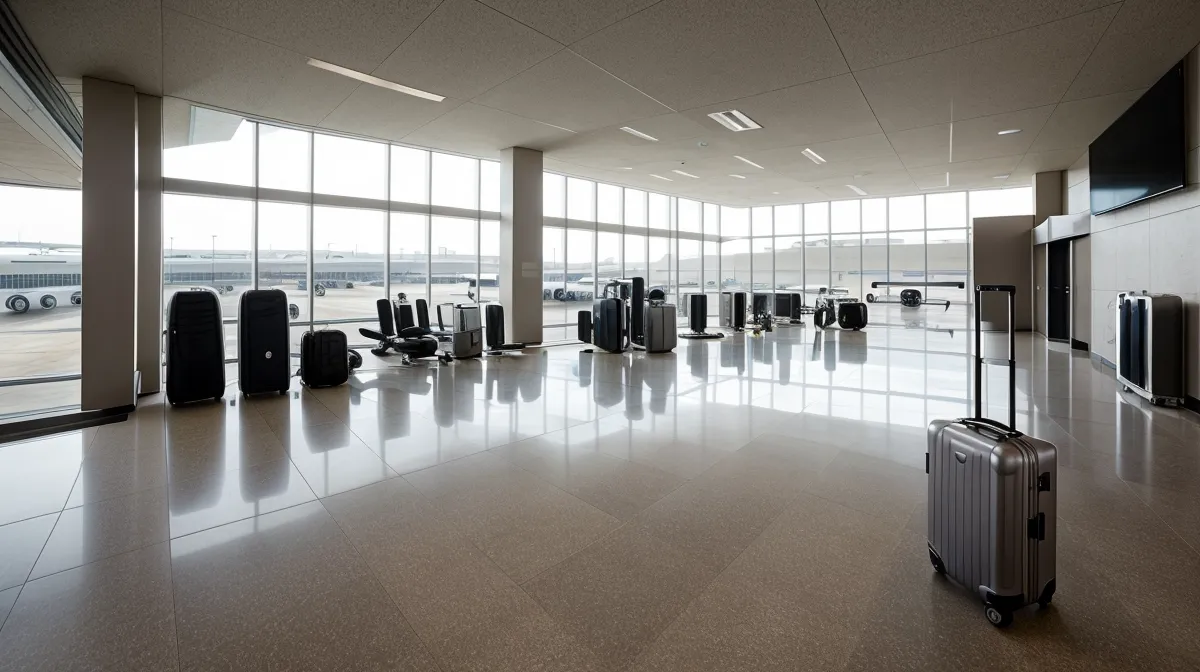
Most of us are stuck inside the standard domestic carry-on size limit of 22 x 14 x 9 inches, so the wheel debate happens within a fixed footprint no matter which side you land on. Airports are floored in something hard and sealed — polished stone, sheet vinyl, whatever holds up under a few hundred thousand footsteps a day — and on that surface a spinner earns every bit of its reputation. You can push it one-handed, spin it sideways to clear a pinch point, and feel like the bag weighs nothing. Hotel corridors don't play by tile rules. Carpet gets installed thick on purpose, partly to meet hospitality acoustics standards so guests in the next room don't hear every wheeled bag rolling past, and that padding is exactly where a small spinner wheel goes to die.
What Luggage Wheels Actually Do on Hotel Carpet
Here's the part the luggage aisle doesn't advertise: keeping a spinner tracking straight on carpet takes real forearm effort, in a way rolling it across tile never does. On hard flooring, all four wheels rotate freely and follow your lead without complaint. On thick pile, they hit rolling resistance instead, and because spinner wheels run smaller in diameter than most people register, they sink rather than roll over (there's a whole separate rabbit hole on wheel casings and bearing grades I'll save for another piece). I've felt a loose axle rattle straight through the handle grip on a bag that wasn't even broken yet, just fatigued — a small warning that the wheel underneath is working harder than it should. None of that shows up the day you buy the bag. It shows up a year or two in, halfway down a corridor, when the thing starts drifting toward the baseboards no matter how you aim it.
Compare that to cutting across O'Hare toward a gate on the H concourse with minutes before boarding closed. The bag trailed behind on its own, and I never once looked down to check it was still tracking straight. That's the tile experience selling every spinner in the store. It has nothing to do with what happens once you're off the concourse and into carpet.
Does a Heavier Frame Solve the Problem?
Aluminum frames are the obvious next question, so let's answer it directly: they help, but they don't fix it. Something like the LEVEL8 aluminum-shell spinner keeps its four wheels locked perfectly vertical because the frame itself won't flex the way a polycarbonate hardshell does under a heavy pack. My long-term testing of the LEVEL8 backed that up — the bearings stayed smooth long after a cheaper spinner would have started rattling loose. But rigidity fixes wheel alignment, not wheel diameter, and a small wheel on a rigid frame still has to push through the same carpet pile. Aluminum also dents rather than flexing back the way a polycarbonate shell does, which is worth knowing before the first scuff (there's a longer hardshell-versus-softside argument that belongs to its own article, but the short version is that neither construction fixes a carpet problem, because that's a wheel problem, not a shell problem).
The Two-Wheel Case Flight Crews Never Argue About
Flight crews are the control group nobody asked for, and they've mostly settled on two-wheel bags without much internal debate. A two-wheel setup uses larger, recessed wheels, similar to rollerblade wheels rather than in-line casters, and the bigger diameter rolls over carpet fibers instead of plowing through them. Tilted back at that familiar angle, the bag tracks behind you like a trailer with its hitch aligned right, which is a very different feeling than wrestling a spinner straight down the same hallway.
My neighbor Denny Abara, a former logistics consultant who works fully remote these days, will talk your ear off about this exact tradeoff if you let him, mostly because his garage has swallowed more suitcases over the years than he'll ever fess up to, wedged behind the gardening equipment nobody else touches. He's the one who first pointed out that flight crews don't pick two-wheelers for style; they pick them because the bags spend more time in hotel corridors than in any concourse (gate-checking on a tight connection is its own way to wreck a wheel or a zipper, but that's a different piece entirely). When I'm on a heavy stretch of regional routes, I reach for the Travelpro for exactly that reason. The Maxlite line runs light, and because it's a soft-side build, it flexes just enough to work with the two-wheel tilt instead of against it. My experience with Travelpro on regional routes backs that up: it's the bag that doesn't fight you, even if it'll never turn heads at the gate.
When the Bag Sags, the Math Changes
Weight changes the geometry of any bag, and a sagging bottom drags on carpet even when the wheels themselves are fine. This is where the Briggs & Riley line earns its premium price tag. Their CX-2 compression system isn't just about fitting more into the case; it keeps the bag squared off at the bottom instead of bulging, so there's less fabric hanging low enough to catch on thick pile.
A sale-rack Samsonite hardshell from an outlet store taught me the opposite lesson. It looked fine on the shelf, held up for about eight months, and then split at a corner seam under exactly the kind of load the Briggs & Riley shrugs off. It wasn't a dramatic failure, just a slow separation at the stitching that got worse every trip until I stopped trusting it near a jet bridge. When I tested the Briggs & Riley CX-2 under the same kind of overpacking, the shape held. That gap between a bag that stays squared and one that sags is the difference between a hallway you barely notice and one that turns into a small workout.
Skipping the Hallway Entirely
Sometimes the better answer is not rolling anything at all. A reader named Clifton Pryke, a pharmaceutical sales rep who found the site after a wheel blew out on him in Phoenix, has been trading notes with me for a while now on inline versus spinner wheels across every kind of hotel and airport floor he runs into, and his angle is different from mine because he skips the whole carry-on decision by shipping sample cases ahead of himself instead of wheeling anything through a lobby. That's essentially what Luggage Forward does for the rest of us: door-to-door shipping with tracking, so the only navigation left is walking from a car to the front desk with nothing but a laptop bag.
It only makes financial sense once you're dealing with oversize gear, sample cases, or more than one bag's worth of stuff. A single carry-on flyer doesn't need to bother, and the domestic transit time makes it useless for a last-minute trip. But for the trips where it applies, shipping the luggage instead of dragging it is the cleanest way to opt out of the whole spinner-versus-two-wheel argument.

So Which One Do You Actually Buy?
If your travel is mostly modern airports with sealed floors, and you want to roll a bag sideways down a narrow aisle without elbowing anyone, buy the spinner. It's the right tool for that job. If your actual pattern is older hotels with carpet that feels like walking on a mattress, buy the two-wheel tilt and stop fighting your own suitcase down the hallway. High-end spinner bearings are closing the gap, but they still ask for more manual correction on soft flooring than a two-wheeler ever will.
For my money: the Briggs & Riley if the budget stretches to a lifetime piece, or the Travelpro if you want the exact bag flight crews trust with their own gear. Either way, judge the purchase by your hallways, not by how the wheels look rolling across a showroom floor.
| Product | Rating | |
|---|---|---|
| Briggs & Riley Top Pick | 9.4 | Read More → |
| Travelpro | 8.9 | Read More → |
| LEVEL8 | 8.5 | Read More → |
| Luggage Forward | 9.1 | Read More → |
Briggs & Riley
Pros
- ✔ Lifetime warranty covers airline damage
- ✔ CX-2 system maintains bag shape on carpet
- ✔ Built like a tank for frequent flyers
Cons
- − Premium price point is a hurdle
- − Noticeably heavier than budget hardshells