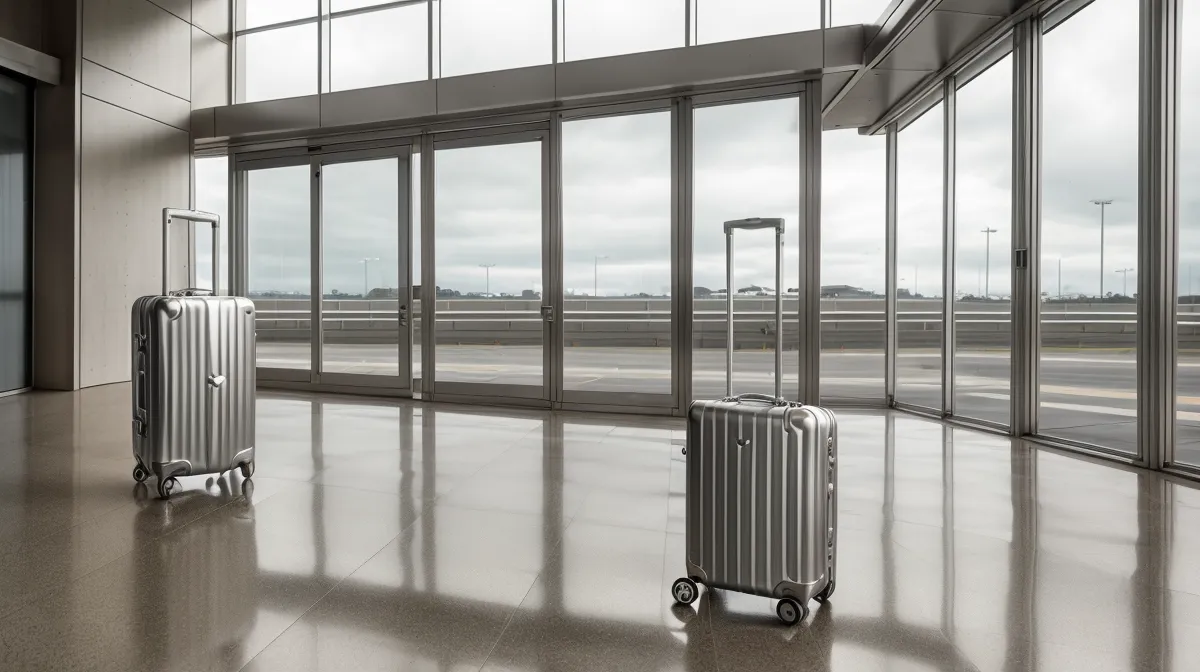
A hardshell carry-on can take a gouge across the lid at baggage claim and still roll dead straight down the next jet bridge. That's the short version of why I switched to hardside suitcases for business travel and never looked back, and it's the question colleagues ask most before buying their own carry-on luggage: does a rigid shell actually hold up, or is it just another piece of travel gear dressed up in aluminum? After swapping bags in and out of rotation for every-other-week flying, my answer hasn't moved: hardside wins for anyone whose suitcase spends more time in an overhead bin than in a closet.
Quick disclosure before we get into it: some of the links below are affiliate links, and I earn a small commission if you buy through them, at no extra cost to you. Every opinion here comes from bags I've actually hauled through terminals myself, not a press kit — the full policy is posted elsewhere on the site.
What Breaks First on Carry-On Luggage
Zippers go first, almost every time. Soft-sided bags invite you to pack one more thing, like an extra charging brick into the front sleeve or a toiletry bag wedged into the lid, until the case bulges past the sizer and the zipper pull is doing the job of a seam it was never built for. Mine finally gave out on a hotel floor at the worst possible hour, snapping clean off the slider while I knelt there trying to force the case shut before a morning flight. Zipper pulls fail at the exact moment you need the bag most for reasons I explore in The Zipper Stress Test: What Ten Years of Regional Flights Taught Me About Failure Points. The short version is that pressure concentrates on stitching and coil teeth the same way an overstuffed grocery bag always finds the weakest handle.
Does Hardside Actually Survive Overhead-Bin Abuse?
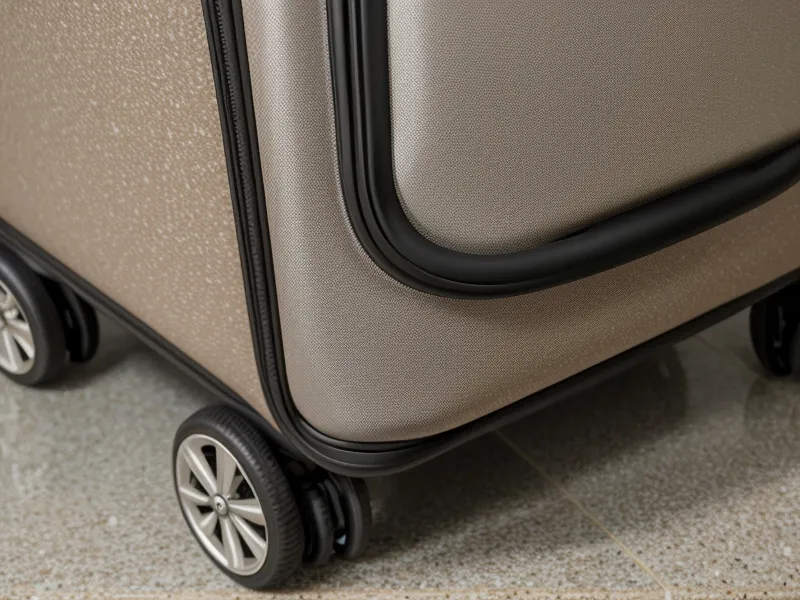
For a long stretch, I swapped my frayed nylon case for a LEVEL8 aluminum-frame hardshell and used nothing else, through snow squalls, packed concourses, and a few sweaty connections. The difference wasn't dramatic in any single moment. It showed up in small things, like noticing the wheels stayed quiet rolling across a terminal floor instead of rattling like a shopping cart with a bad caster (you know the one, in every parking lot, somehow always the one you grab). A rigid shell keeps all four wheel housings square to the ground, so the case doesn't list sideways the way a softer bag does once it's logged some mileage. I can spot that bag coming around the carousel now without hunting for a ribbon tied to the handle; a scar near one corner and a shallow dent on the lid do the job instead.
The telescoping handle is where wear actually shows first, not the shell. It used to snap to full extension on the first try and now catches one notch short often enough that I check it before trusting it in a sprint through a terminal. Aluminum dents rather than flexing back the way polycarbonate does, which is its own trade-off. The first scar stings, but a dent doesn't make the case less useful the way a split seam ends a soft bag's working life. If your shoulders and your wheels have a complicated relationship, Why Your Spinner Wheels Keep Failing After a Year of Business Travel covers why uneven chassis flex is usually the real culprit.
I Tried Compression Bags Before I Tried a Hard Shell
Compression bags seemed like the obvious workaround before I ever looked at hardshells. They do save real space; you can watch a bag visibly flatten under the straps, but the trade-off showed up every time I unzipped one on a hotel bed. Dress shirts that went in flat came out looking slept in, creased in a way no amount of hanging fixed before a meeting the next morning. A hardshell's fixed interior volume means you stop trying to out-engineer the packing problem and just accept the case's real capacity, which turns out to be less stressful than it sounds once you build a system around it instead of fighting it.
Checking the Weight-Limit and Bin-Size Math
Gate agents don't care how clever your packing system is; they care about the sizer frame and the scale. Regional jets make this worse, because their overhead bins are narrower and less forgiving of a bag that's technically within the standard limits but pushes out at the corners. A hardshell's exterior is fixed, so if it clears the sizer at home, it clears the bin at the gate. No exterior pocket catches on the door lip, no last-second negotiation. I broke down the actual weight-limit numbers in Carry On Luggage Weight Limits for Domestic Flights: What I Learned, and it's worth a read before your next trip if you've ever been surprised at the gate. Carriers don't all enforce the same way, and the gap catches people off guard.
Where Hardside Loses
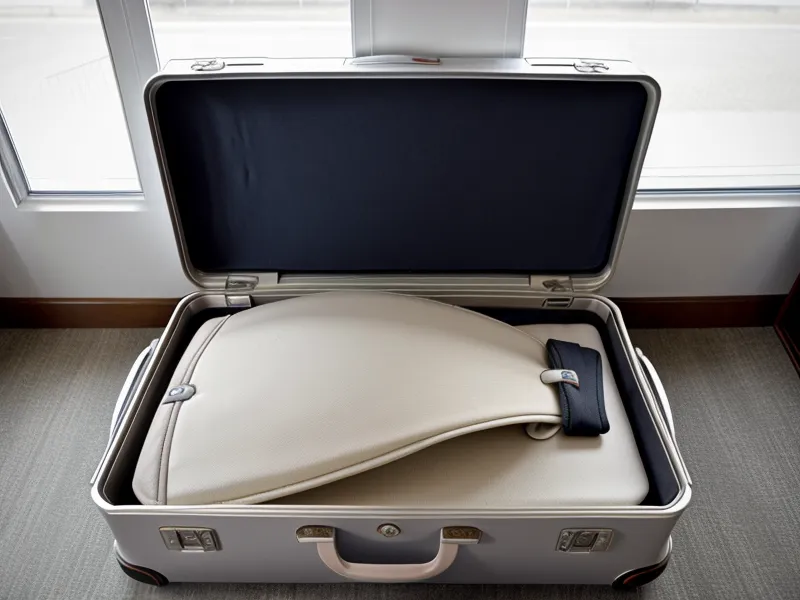
Hardside is not the right call if your trip ends on a train platform instead of a rental counter. A rigid shell can't compress to wedge under a narrow subway seat or squeeze between a stranger's knees on a crowded platform the way a soft duffel can. Flying into a city and then catching transit turns a fixed, right-angled box into a genuine obstacle, and no amount of loyalty to the hardshell camp changes that math. It's also the scenario most likely to end in a gate-check tag, since a case that won't flex to make room for itself is the first one an agent pulls when a flight is full. It's a different kind of punishment than ordinary bin-handling, and worth knowing about before it happens to you. For travelers whose trips run airport-to-train rather than airport-to-rental-car, a flexible soft-sided bag is still the smarter pick, full stop.
Which Hardside Suitcase Is Worth Buying for Business Travel?
Budget and aesthetic preference decide more of this than people expect. The LEVEL8 aluminum-frame case I've been running gives you that boxy, premium-brand look for roughly a third of the price of the names that made it popular, with spinner wheels quiet enough that you notice the difference the first time you roll one across tile. The trade-off is brand recognition; support reviews are mixed next to the bigger names, and it's a newer company without decades of track record. If you want the opposite bet: a fabric-sided case built like furniture, with a lifetime warranty that actually covers airline-handler damage and a compression panel that buys you another shirt or two without splitting a zipper, Briggs & Riley is the one people in my orbit who travel for a living keep coming back to, even though it costs more and weighs more than anything ultralight (you feel that the moment you lift it into the bin).
Flight crews lean toward Travelpro for a reason: it's about the lightest soft-sided option in its price range, and replacement wheels and handles are easy to find when, not if, something wears out. I don't run one myself anymore, but I'd hand that bag to anyone who refuses to give up flexibility for a rigid shell.
The Short Answer for the Luggage Aisle
Here's the actual rule I give friends who ask. If your trips run airport to rental car to hotel to airport, the loop most business travel actually follows: buy hardside and stop second-guessing it. If your trips end on a train platform or a packed sidewalk near somewhere like the Massachusetts Avenue Arts District, where I live, stay soft-sided and let the bag compress when it needs to. A friend of mine who flies RC aircraft out at Eagle Creek Airpark most Sunday mornings asked me this exact question before his last work trip, and that's the version he got: match the bag to the last half-mile of the trip, not to the flight itself.