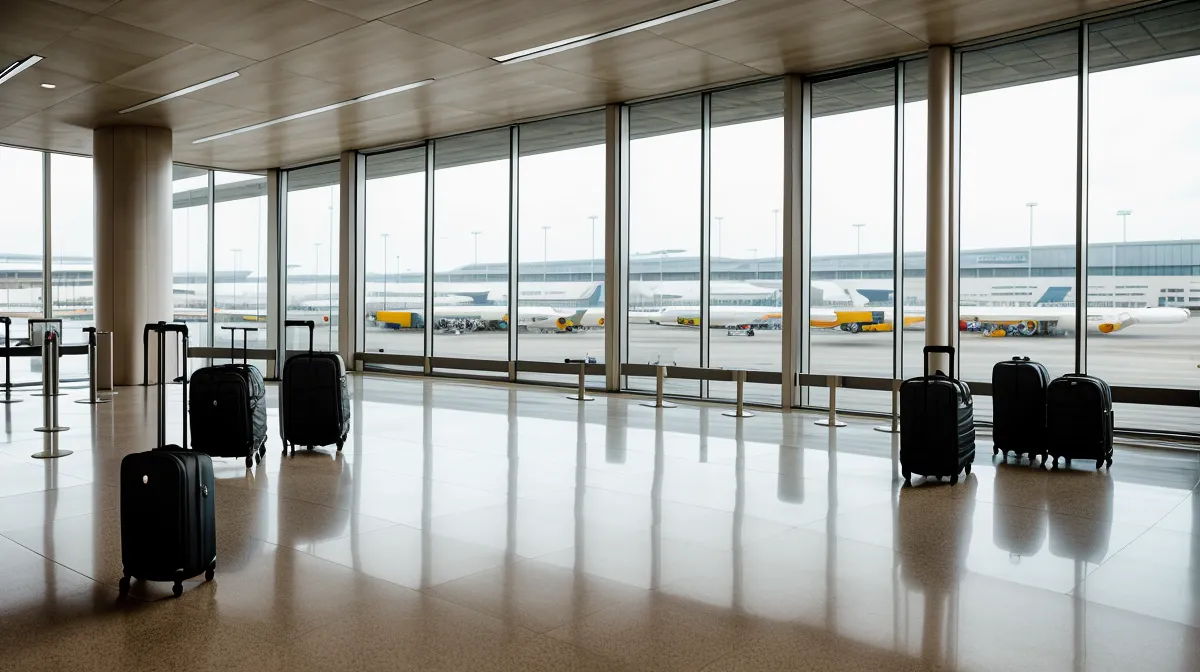
Twenty-six round trips a year, give or take, is the honest math behind flying for business every other week — and after all that time, I still don't have one clean rule for when a bag should ride in the belly of my plane as a checked bag racking up airline fees, or travel ahead of me through a luggage shipping service instead.
Before the comparison: this site earns a commission when you book a shipment or buy a bag through a link here, at no extra cost to you, and every service and case mentioned below has actually sat in my hallway or ridden in cargo this year, not just in a spec sheet.
My default for a solo work trip is almost boring: a sturdy roller that fits inside the standard carry-on sizer, a change of clothes, and a straight walk past the check-in counter to security. Once travel display gear, sample cases, or a family vacation enters the picture, though, that tidy system falls apart, and you're choosing between handing a bag to an airline baggage handler or booking it through something like Luggage Forward instead.
The Real Price of Checking a Bag
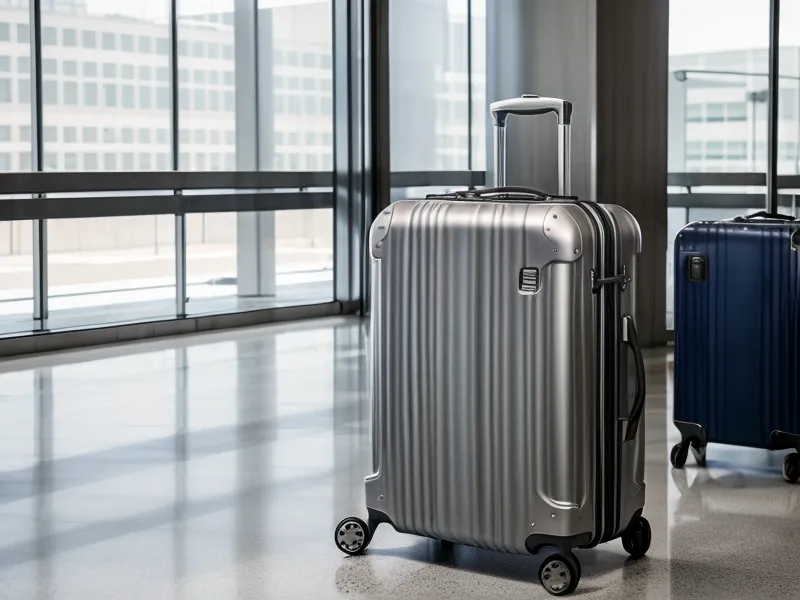
Checking a bag with an airline looks painless right up until it isn't. Roll up to the counter or kiosk, tag the handle, pay the standard fee, and your hands are free for security — simple, as long as you stay under the weight and size limits printed in small type on your ticket.
Fifty pounds is the number that actually matters here, because that's the weight threshold before the airline tacks on an overweight penalty, and once you're hauling trade-show hardware or a trunk of samples instead of folded shirts, that line gets crossed fast. Go past seventy pounds and the fee jumps into genuinely punitive territory, enough to make the shipping comparison worth having in the first place. A second checked bag on top of that doesn't just add a flat fee either — the pricing steepens with each one.
None of that accounts for the physical toll. One winter, dragging two suitcases across salted, slushy concrete during a Midwest layover left my shoulders aching almost as much as a soft duffel with a strap I tried for exactly one trip (never again) — by the second terminal that thing had worn a groove into my shoulder I felt for days afterward. Curbside wrestling is also how I've snapped more than one set of wheel casters, which is its own rabbit hole I got into while writing about how to avoid broken luggage wheels at busy airports and curbside. Checked bags win on upfront cost. They lose on what they do to your back and your hardware.
When Shipping Ahead Saves Trouble
Short answer: yes, but only once your load earns it. Ahead of a regional sales conference, I had an aluminum case stuffed with prototypes, display stands, and printed catalogs — the kind of load that turns a tight connection into a hostage situation. Checking it meant two separate baggage-claim waits and hoping the ramp crew didn't dent the frame somewhere in between.
Scheduling a pickup through Luggage Forward instead worked more like booking a courier than checking a bag. Someone shows up at your door, tags the case, and it travels through its own freight pipeline straight to the hotel desk rather than getting dumped onto an airport sorter with everything else. The service backs that up with a double money-back guarantee if the bag shows up late, which is more accountability than I've ever gotten out of an airline.
Walking through a terminal with nothing but a laptop bag these days feels almost suspicious — no bag-drop line, no sprint across the concourse with a spinner dragging at my arm. Hoisting a test bag into the overhead bin produces no wince in my shoulder at all anymore; it's just lighter than my arm expects, every single time, and that still catches me off guard.
Shipping Still Needs a Head Start
Shipping is not an impulse decision, and it punishes anyone who treats it like one. Checked bags travel on your actual flight: pack the morning of, drop it half an hour before boarding, grab it at the other carousel. A shipped bag needs to leave your hands days ahead of departure, which means decks printed, samples packed, and a wardrobe chosen before the week even starts.
Plans that change the evening before a client visit will flatten a shipping timeline instantly — there's no customer service call that speeds up ground freight overnight. That rigidity is exactly why a friend of mine, who trains for half-marathons along the Monon Trail, never bothers shipping his running gear even for out-of-town races: one duffel, one pair of shoes, nothing that would ever justify the lead time or the price. The math only works once you've got multiple pieces or genuinely heavy gear.
If your whole trip fits into a well-built softside bag like the Travelpro Maxlite, the kind of bag I got into more in why softside luggage fits better in small regional jet overhead bins, just roll it down the jet bridge yourself. Shipping earns its keep on multi-piece loads, fragile gear, or anything bulky enough to tip you into second-bag or overweight fee territory, not on a single light spinner.
Durability Under Handling: Checked Bags vs. Shipped Ones
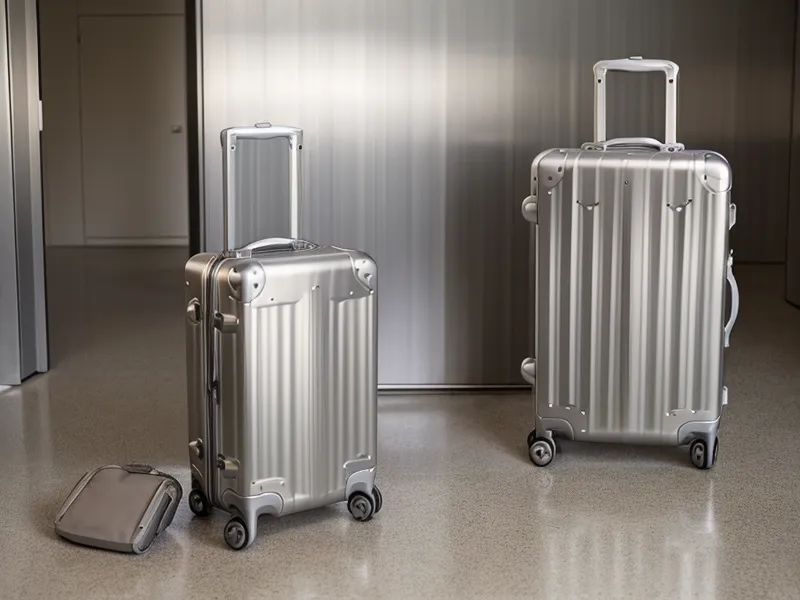
Checked bags take a beating that would void most product warranties in any other industry. Conveyor slides drop them from height, baggage carts leave them sitting on wet tarmac, and cargo holds stack hard cases on top of soft ones without much thought for what's underneath. If you check bags on any kind of schedule, the hardware basically needs to be furniture.
For standard checking, Briggs & Riley earns its premium price mostly through its unconditional lifetime warranty, which explicitly covers airline-inflicted damage rather than just factory defects. I've leaned on that more than once, which I wrote up in my experience using the Briggs and Riley repair service after years. Their compression system also buys you an extra shirt or two before the zipper has any reason to complain.
Shipping couriers are gentler by design: wrapped pallets and dedicated handlers instead of an automated sorter built for volume, not care. That's where something like the LEVEL8 aluminum case earns its spot in my rotation. It looks sharp and protects what's inside, but an airline ramp crew can dent that shell permanently in a way a shipping courier almost never does.
Traveling As a Family Changes the Calculation
Business logistics are one kind of math. A family trip across three airports with a spouse, snacks, boarding passes, and multiple suitcases is a different operational problem entirely, and the security line doesn't care that you're outnumbered by your own luggage.
Shipping our main clothing bags ahead to a rental cabin for one trip changed the entire texture of the morning: just backpacks through the terminal, no sprint to the carousel on landing, no dread that a mishandled bag would leave anyone without clothes for the weekend. It cost more than checking would have. For a family trip, that cost bought something closer to actual peace, which is a harder thing to put a number on.
Deciding Between Checked Bags and Shipping
The rule of thumb settles into three lanes once you strip out the noise. A solo trip under two days belongs entirely in a carry-on — no baggage line, no advance planning, no dependency on a courier's schedule. A single bag under fifty pounds belongs at the airline counter, especially if status or a travel credit sc-xAoRDD already waives the first checked fee (mine does, most of the time); the wait at the carousel is still cheaper than the alternative. Multiple bags, overweight gear, or anything resembling a trade-show booth belongs with Luggage Forward — once you're staring down second-bag charges or that steep fee above seventy pounds, shipping stops being a luxury and starts being the obviously cheaper option, never mind what it does for your back.
If an upcoming trip involves oversized display gear, a multi-city stretch, or a vacation where dragging suitcases through train stations sounds exhausting on its own, it's worth checking Luggage Forward against your actual flight costs before defaulting to the counter out of habit.
| Product | Rating | |
|---|---|---|
| Luggage Forward Top Pick | 8.8 | Read More → |
| Briggs & Riley | 8.7 | Read More → |
| Travelpro | 8.3 | Read More → |
| LEVEL8 | 8.1 | Read More → |
Luggage Forward
Pros
- ✔ Door-to-door luggage delivery lets you bypass check-in queues and the baggage carousel entirely
- ✔ Includes a double money-back on-time guarantee if your luggage does not arrive on schedule
- ✔ Cost-effective alternative when facing airline second-bag fees and heavy overweight penalties
- ✔ Drastically lowers handling abuse compared to standard airport baggage conveyor systems
Cons
- − Demands several days of transit buffer, making it impractical for short-notice departures
- − Not financially practical if you are traveling light with just a single standard carry-on