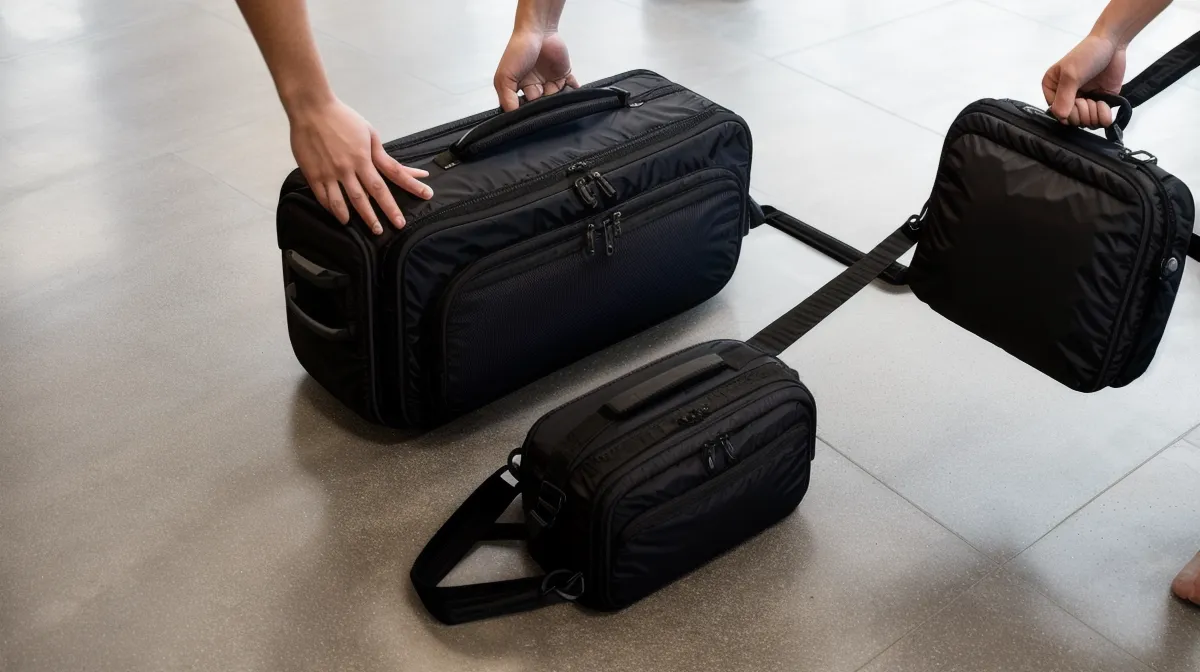
A suitcase that passes every airline's carry-on sizer still ends up tagged and wheeled down to the belly of a regional jet. That reality has dogged me through enough tight connections out of Indianapolis that I've started keeping track of which bags make it into the bin and which ones get kneed, wrestled, and finally surrendered at the jet bridge door.
Regional travel is where carry-on durability actually gets tested, not on a wide-body with eight feet of bin space overhead, but on the fifty-seat jets that make up roughly half of any business traveler's schedule flying out of a mid-size hub. Carry-on tips written for international routes mostly fall apart the moment you're staring down a bin shaped like a bread loaf.
The Bin Isn't as Simple as 22 x 14 x 9 on a Regional Jet
Start with the aircraft, because the aircraft is the actual rulebook here, not the airline's website. A lot of the bi-weekly grind out of a hub like Indianapolis happens on the Bombardier CRJ200 or the ERJ 145, both of which run a 1-2 seating layout. The single-seat side of the cabin gets a bin that would struggle to swallow a loaf of bread, let alone a standard-size suitcase.
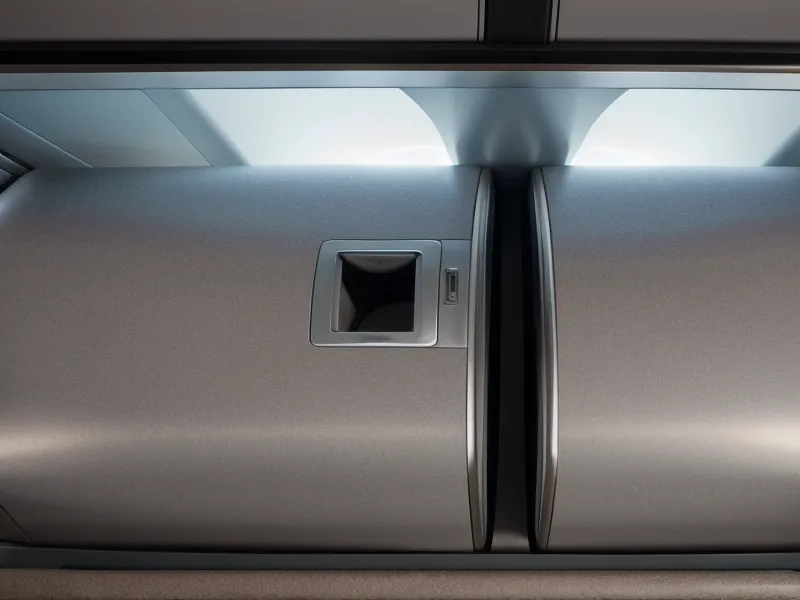
The domestic carry-on limit most of us pack to is 22 x 14 x 9 inches, and most hardside manufacturers build right up to that number, sometimes a hair under it. The trouble is that a CRJ200 bin can run about 9.5 inches at its absolute deepest point, then tapers fast as the ceiling curves away. A bag that's legal on paper can still lose to the shape of the plane.
A reader named Marcy Bellew emailed me once after buying the wrong bag off somebody else's sizing chart, and her complaint was dead-on: the exterior dimensions printed on a spec sheet and the usable interior dimensions of a bin are never the same number, because wheels and handles eat into clearance that nobody puts on a label. She measures everything in both directions now, and she's right to — it's one of the more useful habits I've picked up from a reader. That gap is exactly what gets people bounced even when their bag is, on paper, perfectly legal, a problem covered at length in Beyond the Sizer: Why Your 'Standard' Carry-On Might Still Get Checked.
None of that math matters if the bag itself can't adapt to it, which is where the material comes in. A rigid shell is a fixed shape. A bag built from something like 1050D ballistic nylon is a shape with options.
Why a Rigid Shell Can Be Legal and Still Not Fit
Hardside luggage — polycarbonate, ABS, whatever the marketing copy wants to call it that year — is built to resist impact. That's a fine trait if the bag is getting thrown off a cart. It's a liability in a bin that curves the wrong way, because a shell that's a millimeter too wide behaves exactly like a shell that's a mile too wide. There's no compressing a box.
Not every rigid failure is even about fit. I grabbed a no-name spinner off Amazon a few years back because the photos looked fine and the price looked better; the wheel casing cracked on the second trip. Cheap and rigid is a bad combination no matter which problem you're trying to solve.
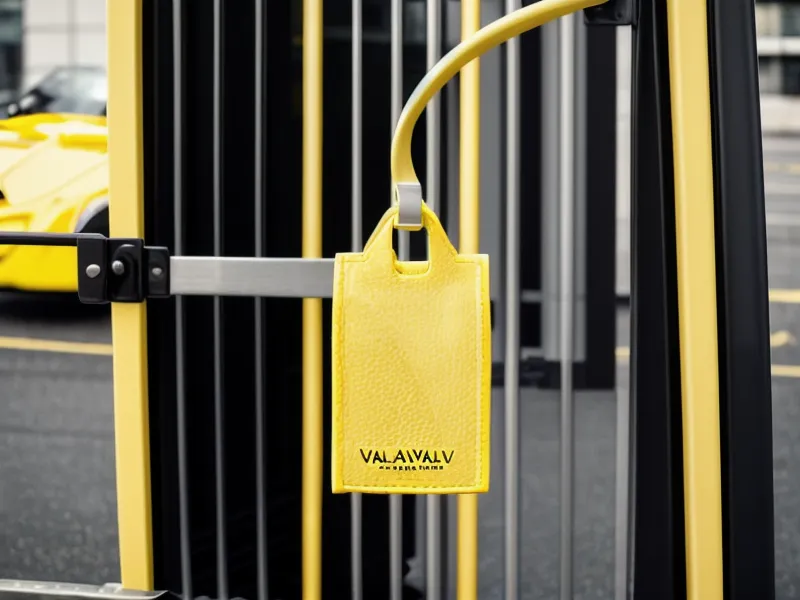
The fit failure shows up as a yellow valet tag clipped to the handle while a flight attendant tries, and fails, to force a rigid case to yield a half-inch it simply doesn't have. That tag means standing on the jet bridge while everyone else deplanes, waiting on ground crew to dig the bag out of the belly. Since switching back to a well-built fabric case, I haven't had to wait on one of those tags once, and this Briggs and Riley suitcase still works after years of travel is the example I keep coming back to for what that kind of durability actually looks like in practice.
How the Fabric Actually Buys You Room
Structured softside fabric isn't the flimsy gym-bag material it sometimes gets mistaken for. High denier counts behave more like stiff canvas than cloth, but even the toughest weave has a small amount of play between the fibers. Push on a softside panel and the air inside the bag shifts, the clothes compress a fraction, and the whole case bows inward just enough to clear a bracket or a curved rib that would stop a hardshell cold. That's the entire mechanical advantage, and it's a small one — which is exactly why it matters in spaces measured in half-inches instead of feet.
My colleague Roz Henriksen, who's on a plane nearly as often as I am, keeps a running log in her notes app of which bags failed on which routes and in which climates. Her numbers back up what any regional flyer eventually figures out on their own: bin geometry isn't consistent from route to route, and a fabric case has more room to argue with a bad one than a rigid case ever will.
A baggage cart once dropped a hardside bag of mine on the tarmac during a long de-icing delay, and it wasn't until I got it home to the gear room that I actually saw the damage — afternoon light through the window caught a hairline crack running down the corner that the terminal's fluorescent lighting had hidden completely. The fabric case that's handled the same Indianapolis-to-Chicago route for six months now still rolls smooth across the tile at Midway, no wobble, no catch, nothing waiting to show up under better light.
The Overstuffing Trap That Cancels the Advantage
Flexibility cuts both ways, and this is the part the softside crowd doesn't love to admit. Because the fabric gives, it's tempting to treat the front pocket like a junk drawer — a laptop, a charger, a jacket, whatever didn't fit anywhere else. Overstuff it and the bag stops being a rectangle and starts being a cylinder, which is the one shape that does worse in a curved bin than a straight-sided box ever would.
A bloated softside bag can wedge itself into a gap, then push against the bin's latch mechanism from the inside hard enough that the door won't release at the other end. That's an entirely different, self-inflicted kind of delay. Treat the front pocket like a precision tool — a paring knife, not a mallet — and the squish stays available for when the bin actually needs it. Pack it to bursting and you've built yourself a soft-sided hardshell with none of the upside.
So Which One Should You Check Next Trip?
The decision isn't about which shell looks tougher in a product shot. It's about which routes make up your schedule. Heavy on regional legs — Indianapolis to Chicago, Cincinnati to Detroit, anything flown on a fifty-seat jet — and a softside case earns its keep every single week. Mostly on mainline, wide-body routes with deep, square bins, and the whole hardside-versus-softside argument matters a lot less, which is really a separate question covered in the overhead bin gamble breakdown on checking in versus carrying on altogether.
Luggage brands keep selling the armored look of a hardshell because it photographs well in a studio. Regional jets don't have studios. They have irregular, shallow, oddly curved bins that reward a bag willing to compromise its shape for thirty seconds at a time. Give me the squish over the thunk, every single trip through a 1-2 cabin.