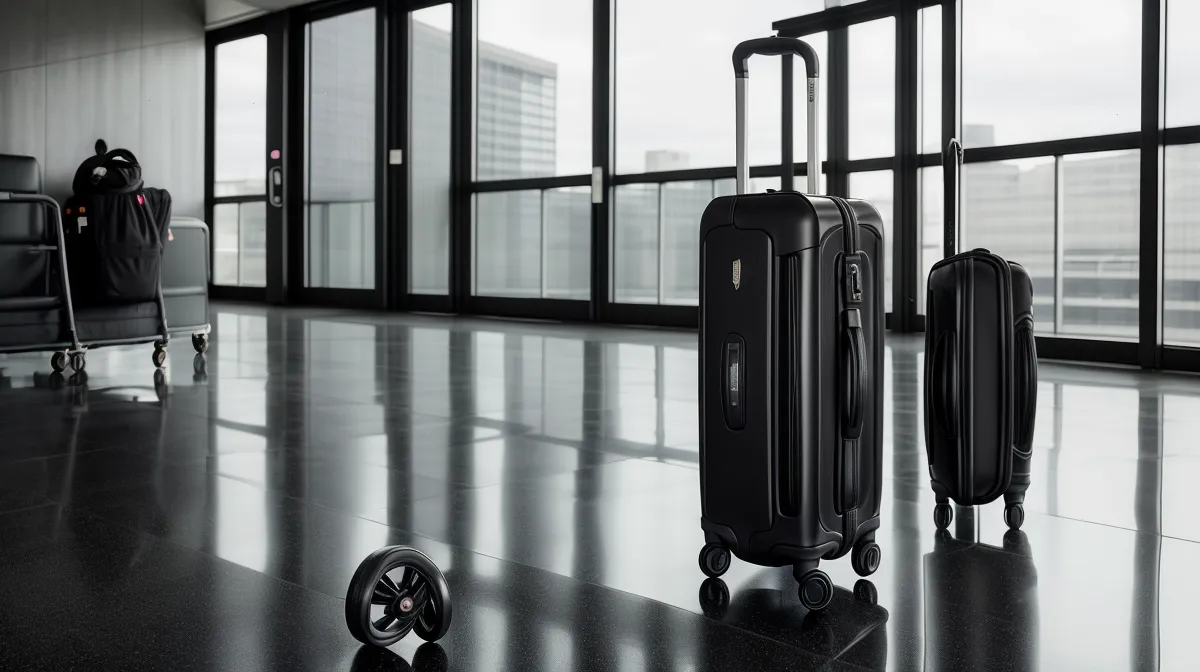
A sale-rack Samsonite hardshell lasted eight months before the corner seam split; the bag that replaced it has rolled through every overhead bin on my business-travel calendar since without a single loose wheel. That gap is the real lesson behind how I pack a 22-inch spinner for a three-day client trip now: carry-on packing built around luggage durability, not the marketing on the box.
Quick disclosure up front: this site runs on affiliate links, and if you buy luggage or a shipping service through one of mine, I get a small commission at no extra cost to you. I only point at gear I've actually flown with or picked apart myself.
The Myth of the Versatile Carry-On Wardrobe
Most packing advice for business trips pushes versatile layers — pieces that supposedly flex from a client meeting to a hotel gym to a casual dinner. That's exactly backwards for a high-stakes trip where the last thing you want at six in the morning in a chain hotel is a wardrobe decision.
Instead I run three single-use kits: one navy suit, one charcoal, one black, each bundled with its own shirt, tie and socks so nothing mixes across days. A pair of gym clothes rolls down to fist size, a stuffed pouch holds chargers and cables, and the dress shoes travel on my feet instead of eating a cubic foot of the case. The full mechanics of building kits like that — what goes in first, how the shoe bag sits against the wheels — is its own walkthrough I keep separate from this one; the point here is just why single-use kits beat mix-and-match layers for a trip like this in the first place.
Is 22 Inches Actually a Universal Rule?
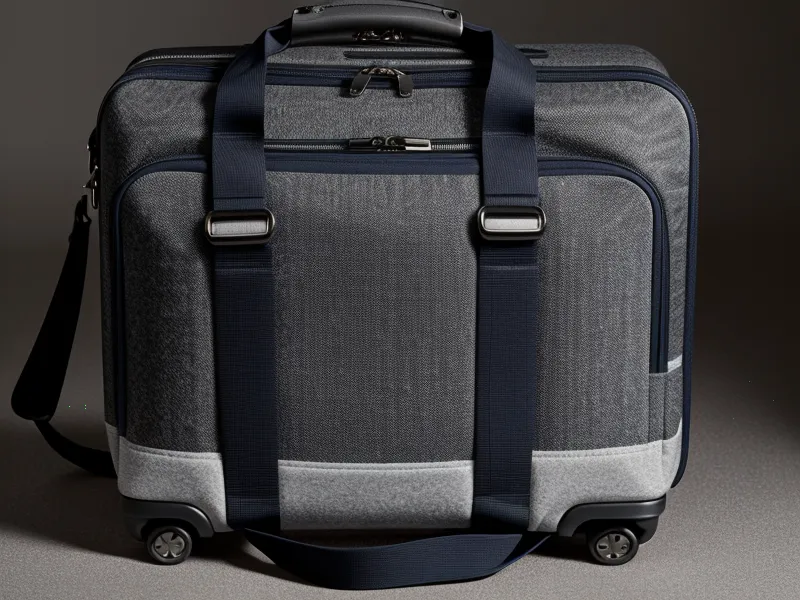
The dimension everyone quotes, 22 inches by 14 by 9, reads like a fixed law, and it isn't one. Delta, United and American all publish roughly that number, but what a gate agent actually measures against a sizer varies by hub and by how backed up the flight is that day.
My neighbor Denny Abara, a former logistics consultant who now works from home, keeps a spreadsheet of which carriers actually enforce the bin-size rule at which airports, and updates it after every trip either of us takes. His numbers back up what years of gate-checking taught me: the chart on the airline's website is a guideline until a specific gate agent in a specific mood decides otherwise. What a regional jet's overhead bin can actually swallow is its own separate question from what's printed on that chart, and getting gate-checked at all is one of the fastest ways to wreck a wheel or a zipper before the trip even starts.
Durability Beats Marketing on Every Business Trip
The Samsonite hardshell I mentioned earlier wasn't a bad-luck bag; it was built to a price point, and the corner seam was always going to be the weak spot once real wheel abuse started stressing it. When I replaced it, I picked the Briggs & Riley Baseline mostly because the warranty explicitly covers airline-handler damage, not just factory defects, which told me more about how the company expects the bag to be used than any spec sheet did.
Compression was the other draw — the CX-2 system lets you pack the case expanded and then cinch it back down, a different trick than the fabric expansion zippers on cheaper bags. I've gone deep on whether the Briggs & Riley CX-2 compression is actually worth the extra space elsewhere, so I won't repeat it here. Whether you go hardshell or soft-side in the first place is its own decision with trade-offs I've covered separately; what matters more day to day is the zipper itself, since a stuck zipper mid-trip is its own emergency with its own fix, common enough on cheaper bags that it gets a separate walkthrough of its own for handling it in a hotel room instead of a repair shop.
The spare room that used to be a guest bedroom now stages gear — just enough clear floor to run a spinner the length of it, a pegboard on one wall holding wheel axles and zipper pulls salvaged from bags that didn't make it, and a rolling rack in the corner where whatever I'm testing waits for the next trip. It's not glamorous, but it's where I find out which claims on a spec sheet hold up before I put my own schedule behind them.
Wheels Don't Fail Because of Bad Luck
A wheel that locks up or starts wobbling on the concourse gets blamed on bad luck more than it should. Most of the time it's the floor talking to the bearings; the full how of what makes one set of wheels forgiving and another set garbage is a longer conversation I've had elsewhere, but the short version is that cheap wheels punish exactly the transitions frequent flyers hit most: thick gate carpet giving way to polished tile.
Six months after switching bags, I caught myself watching the wheels track dead straight across the tile at Midway without so much as a flutter, and realized I hadn't thought about them once since the jet bridge. O'Hare International Airport's floors run smoother still, and the difference between a bag that crosses both without catching and one that stutters over the seam lines comes down to what's inside the wheel housing, not the finish on the outside.
A reader named Clifton Pryke, who turned into a regular email correspondent after a wheel blew out on him at a gate in Phoenix, keeps his own log of wheel failures sorted by airport floor type. He's sent it over twice now, and it lines up with what I've watched happen to my own bags — smooth polished concourses are gentler than most people expect, and the real damage happens on rough transitions and curb pickups, not the marble lobbies everyone worries about.
When Shipping Beats Carrying the Bag Yourself
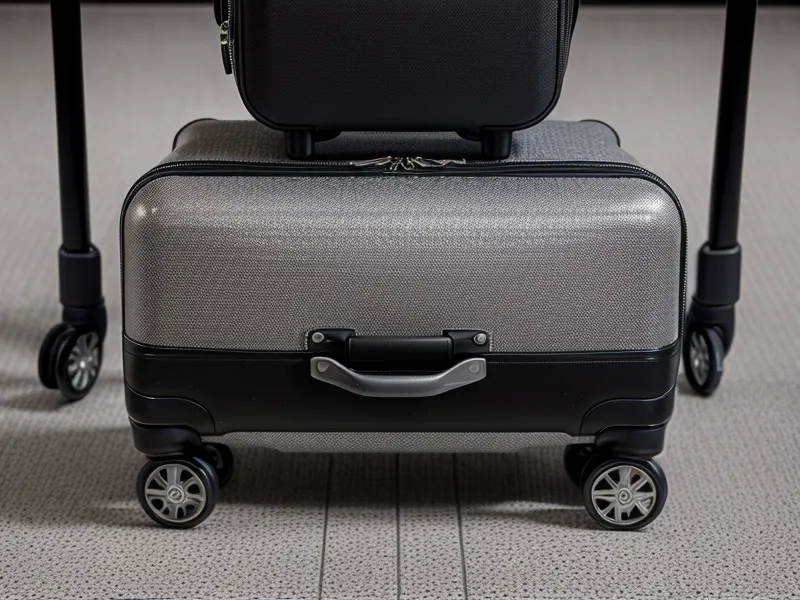
For most three-day trips I still carry everything, but heavy sample cases change the math entirely. When a presentation means hauling more than a suit and a laptop, I ship ahead with Luggage Forward instead of fighting the carry-on math at the gate.
It only pencils out when there's real bulk involved — a single carry-on flyer shipping one bag for a short domestic hop is paying for convenience that checked-bag fees would cover cheaper. I've laid out when the hands-free hustle is actually a lifesaver in more detail elsewhere. The one wrinkle worth knowing going in: whether the package is actually sitting at the front desk when you check in is its own logistics question, separate from the shipping itself, and worth confirming before you build a trip around it.
The Only Metric That Actually Matters
None of this is about buying the most expensive bag on the rack. It's about buying for how something survives, not how it photographs — the cheap Samsonite looked identical to bags twice its price until the seam gave out, and looks told me nothing useful going in.
If you're flying a handful of times a year instead of every other week, you can reasonably stop here and pick something lighter. Travelpro has spent decades supplying flight crews, which is about as close to real torture-testing as this industry gets, and the trade-off is a soft-side case that's noticeably easier on your shoulder than a hardshell but picks up scuffs faster and skips the compression hardware entirely. LEVEL8's aluminum-frame models land closer to a hardshell look without the hardshell price, though aluminum dents rather than flexing back the way polycarbonate does, so the first real scuff stings more than it would on a cheaper shell. Neither is wrong for someone who isn't doing this every other week.
What hasn't changed is the math: a bag that fails costs you more in a delayed boarding line, a scrambled outfit, or a wheel replaced mid-trip than the premium ever would have. Whether you're a seasoned Account Manager living out of a rolling case or just starting the travel-gear learning curve, buy for the trip you're actually taking, not the one printed on the box.