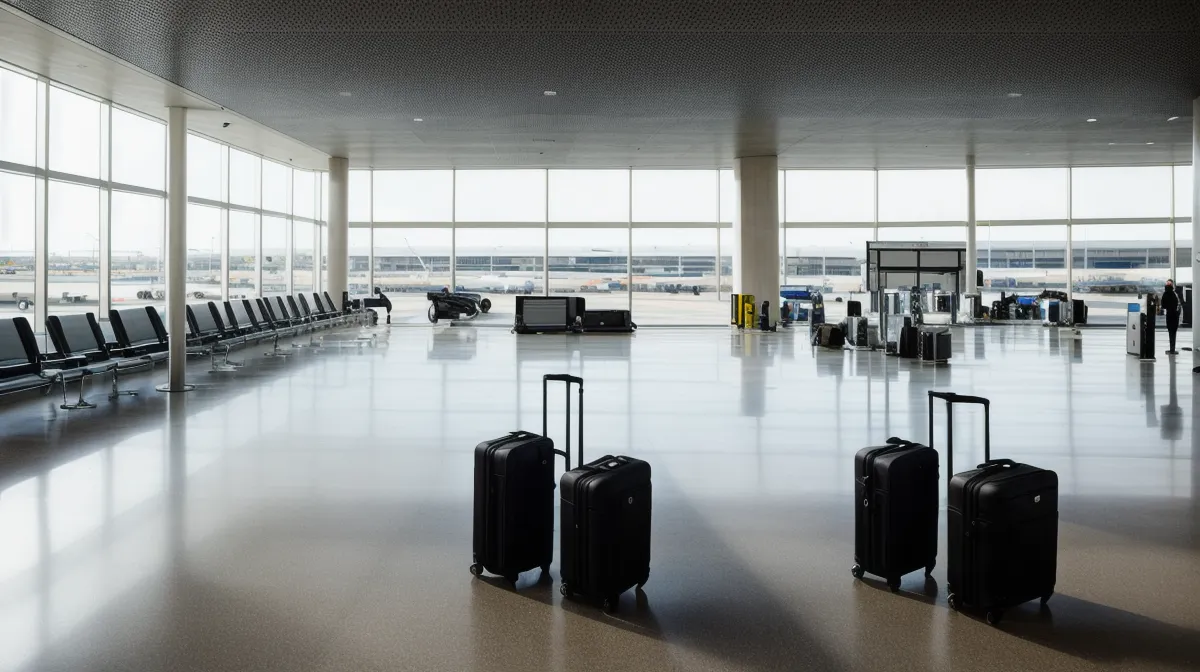
A carry-on doesn't get heavier when you load it with packing cubes. It gets organized, and for a road warrior those are two entirely different problems. My answer on packing efficiency, after years of watching bags turn into laundry crime scenes by day three of a business-travel run, splits cleanly by trip type: cubes pay for themselves if you're unpacking at each stop, and they're close to dead weight if you're doing a same-day hotel flip, city after city.
Quick housekeeping before we get into the luggage-organization weeds: this site runs on affiliate links, a couple of which show up below. Buy a bag or a shipping service through one and I earn a commission at no extra cost to you — I've hauled these brands through enough concourses to know which ones actually survive a real schedule, not just a showroom floor.
Do Packing Cubes Solve the Carry-On Math, or Just Rearrange It?
Flying out of Indianapolis for business every other week means living inside the standard domestic carry-on size limit — 22 x 14 x 9 inches, no appeals process. Whatever a week of client meetings requires — shirts, a spare pair of shoes, enough toiletries to not look like you slept in a terminal — has to fit inside that same fixed box, cubes or no cubes. That's the first thing worth saying plainly: packing cubes don't add space. The extra fabric and zippers can shave a sliver of usable volume off the top, which is the opposite of what the marketing implies.
What cubes change is behavior, not capacity. A single stuffed compartment turns into a small set of labeled bins — shirts in one, socks and gym gear in another — so pulling one item doesn't collapse the whole stack the way a pile of ranger rolls does the second you tug a blazer free. That's a packing-efficiency win, and it matters more once you add a laptop sleeve or a pair of oxfords into the mix — something dense and unyielding that will crush anything soft riding underneath it, cube or no cube. That's really a weight-distribution problem cubes were never built to fix.

Case One: The Multi-Night Trip Where Settling Is the Enemy
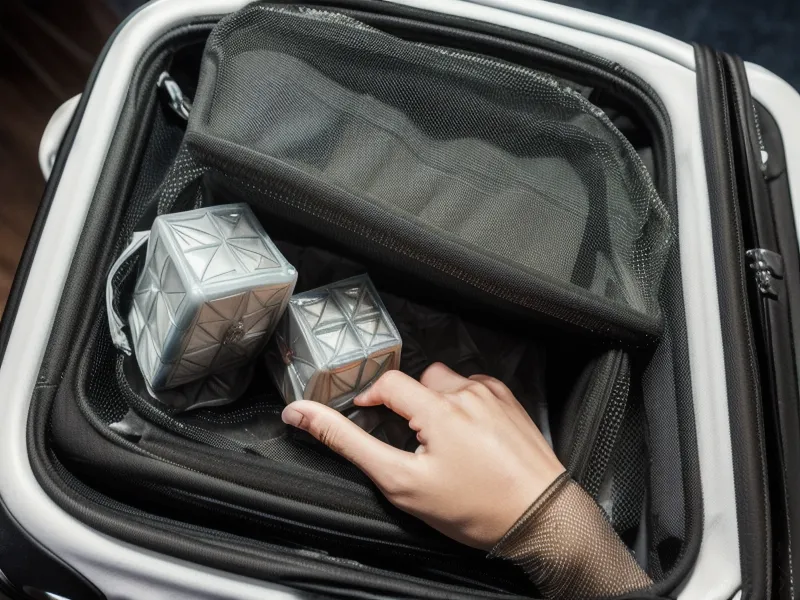
Here's where cubes prove themselves. Unzip a shirt cube at midnight in some hotel room two connections deep, and the shirts on top sit exactly as flat as they did that morning — no digging past a wrinkled heap, no held-breath check for a clean collar in the dark. Nothing loose means nothing has room to settle, and settling is the actual enemy on a trip long enough that you're opening the bag more than once.
Before I add another cube to any bag, I run it past the Airline Carry-On Size Limits by Carrier chart, because different carriers enforce that 22 x 14 x 9 box with wildly different patience — some gate agents eyeball it, some make you fight the metal sizer cage, and cubes give you zero extra margin either way.
Regional jets make this worse. Anyone who's boarded a CRJ200 out of Terminal A at Indianapolis International knows the overhead bins were sized for a briefcase from another era, not a modern 22-inch spinner, so a last-second gate-check is basically part of boarding. With cubes, that scramble stops being a public event — pull the essentials cube and a laptop, zip the rest shut, hand it over. Without them, it's a jetway floor show: your suitcase open, a line of tired passengers watching you dig through laundry for a charger.

This is also where the bag itself starts to matter as much as what's inside it. My Briggs & Riley works with the cubes instead of against them: you load the cubes, then its internal compression system ratchets down and squeezes the air out around them. The Briggs and Riley lifetime warranty gets most of the attention in reviews, but for someone stacking cubes into a bag several times a week, the compression mechanism underneath that warranty is doing the daily work — a far more controlled way to shrink a stuffed bag than sitting on it and hoping the YKK zippers hold under the strain.
Case Two: The Daily Hotel-Hopper Loses the Zipper Tax
Now the other side of the comparison, because this isn't a piece that pretends cubes are right for everyone. If you're checking into a different hotel every single night — in by eight, out by seven the next morning, on to the next city — cubes can be a genuine hindrance. Every extra zipper is a tax on a morning you don't have spare minutes for: unzip the suitcase, then the cube, then the smaller pouch inside it, before you've even found coffee.

A reader named Marcy Bellew flies a healthcare sales route with a schedule close enough to mine that her notes on this tend to land dead-on, and she said as much after trying cubes on a four-city sprint: they didn't save her any time, they just added a step between her and a clean shirt. For that kind of trip, the suitcase should work like a daily driver — quick access to the trunk, nothing between you and what you need.
The tax only pays for itself once the trip slows down. Stay in one place more than a single night, and the same zippers that annoyed Marcy start buying back all the time they cost, because now you're not repacking from scratch every morning — you're just pulling one cube back out.
Weighing the Bag Underneath the Cubes
None of this works if the bag underneath the cubes is flimsy. I've watched people try to use cubes to make up for a cheap shell, packing more into something with none of the ballistic nylon protection that keeps a bag's structure intact after a baggage handler treats it like a shot put. My colleague Roz Henriksen, who flies about as often as I do, won't touch a hardshell for exactly this reason — she'd rather have a dent she can pop back out than a shell that cracks and shatters on a concrete ramp. That hardshell-versus-softside argument is its own rabbit hole, but it's worth knowing where you land on it before you build a cube system around either one.
Wheels matter just as much and get a fraction of the attention. I learned that the hard way with a no-name spinner off Amazon that cracked a wheel casing on its second trip — a failure that had nothing to do with what was packed inside and everything to do with how the wheel housing was built. Cubes can't fix a bag that fails at the axle.
Then there's the bag that looks like it solved everything and doesn't. A LEVEL8 aluminum case sitting in my closet still gets compliments for looking like a Rimowa at a fraction of the price, and the first real scuff it took dented and stayed dented instead of flexing back the way a polycarbonate shell would. Aluminum doesn't forgive the way plastic does, and that's a construction tradeoff worth knowing before the price tag talks you into it — a nicer-looking case isn't automatically a tougher one, and which tier of a product line a bag sits in tells you less than the shell material does.
For anything that isn't a simple carry-on trip — sample cases, trade-show gear, a second bag's worth of materials — I've stopped fighting the airline entirely and started using Luggage Forward instead. Let a shipping service deal with the checked-bag weight limit of 50 pounds and the logistics of getting a box to a hotel's front desk before you land; I'll carry a light bag with two organized cubes and call it a win. That trade only makes sense once you're shipping enough volume to justify it — a single carry-on flyer doesn't need it, and it's not built for a same-day turnaround either, so it lives in the same category as cubes: genuinely useful for the right travel pattern, dead weight for the wrong one.
Which Setup Actually Fits Your Schedule
So here's the actual verdict, not the marketing version: packing cubes are worth it for frequent business travel if your trip involves more than one hotel night in the same bed, a gate-check risk on a regional jet, or enough stops that finding things by feel in the dark becomes a daily event. They're not worth the extra zippers if you're doing a same-day city-to-city sprint where speed out of the bag matters more than what's inside it staying flat. And no cube, however well organized, makes up for a suitcase that can't survive being thrown — a hardshell that shatters, a wheel casing that cracks, an aluminum corner that dents and stays dented all cost you more than a wrinkled shirt ever will.
If you're building a setup instead of just buying a bag, that's where I'd start: a suitcase solid enough to take the abuse — my Briggs & Riley has outlasted every soft-side bag I've owned by a wide margin — paired with just two or three cubes, not a full set. Somewhere on a jetway at Terminal A, waiting for a gate agent to reach for your bag, you'll be glad the decision got made ahead of time instead of on the floor of a hotel room at midnight, digging for a clean shirt.